The 3 Keys to Every Construction Contract
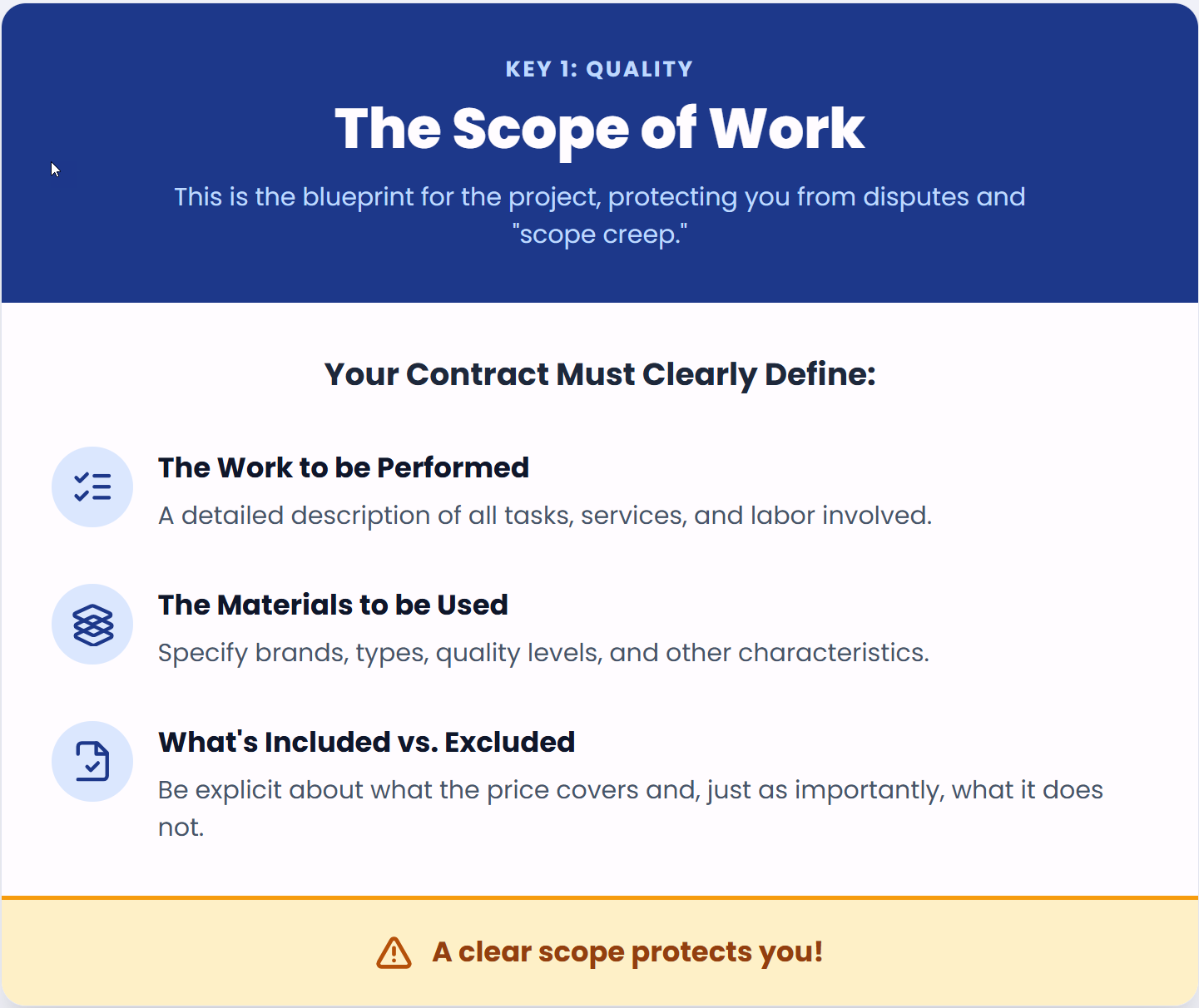
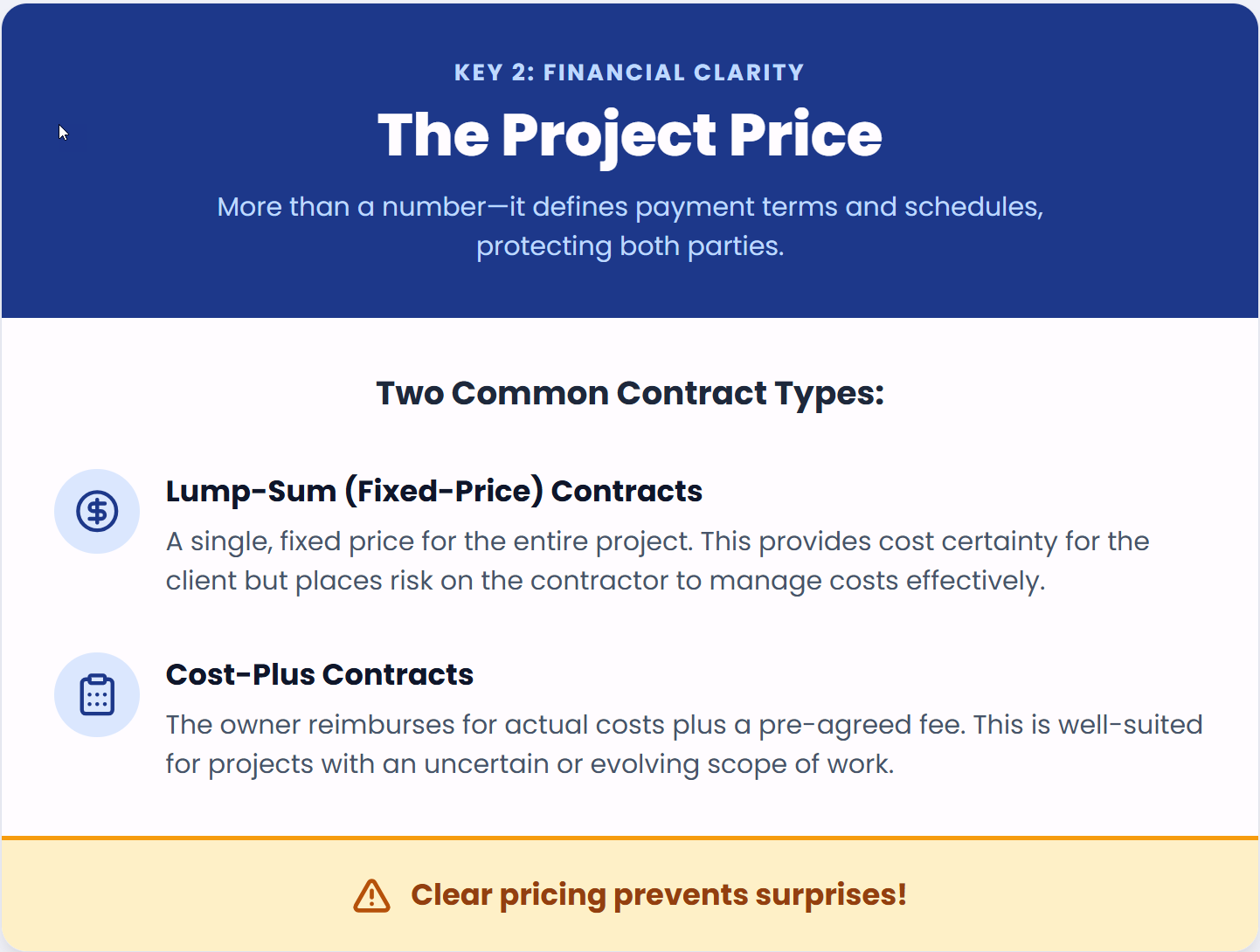
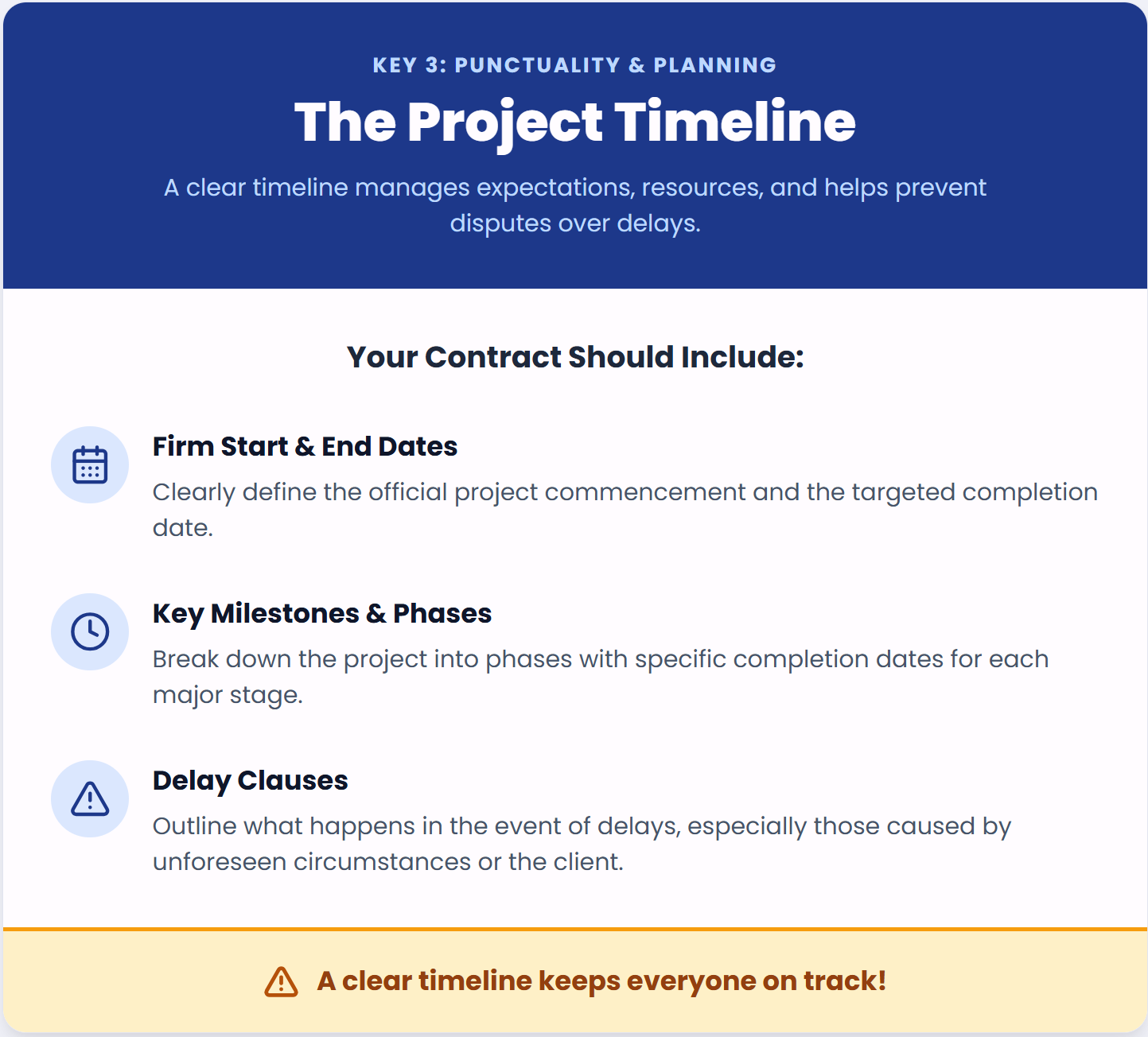
A handshake isn't enough. In the world of construction, the contract is your business's legal blueprint—it protects you, your client, and your project. But a great contract is more than just a piece of paper; it’s a clear, mutual agreement that leaves no room for misunderstanding. While contracts can seem complicated, every solid agreement is built on three fundamental keys. Let's take a journalistic deep dive into the options.


The Power of Standard Documents
One of the most effective ways to ensure your contracts are sound is to use industry-standard documents. The documents from the American Institute of Architects, commonly known as AIA, are widely used for this purpose. The AIA A201: General Conditions of the Contract for Construction is considered the keystone document. It outlines the rights, responsibilities, and relationships between the owner, contractor, and architect, and is adopted by reference in other documents to keep them from being overwhelmingly long.
For example, the AIA A401: Standard Form of Agreement Between Contractor and Subcontractor is a standardized document that dictates the relationship between a general contractor and their subcontractor, and it incorporates the AIA A201 by reference. This "flow-down" of terms ensures everyone on the project is working under the same legal framework.
By using these standard documents, you show professionalism and ensure you're covered by a time-tested legal framework.

Final Word: Contracts Protect Your Legacy
A great construction contract, built on these three fundamental keys and supported by a strong legal framework, is more than just a legal formality—it is a tool that protects your business, your client, and your reputation. By understanding and mastering these core elements, you’re not just preparing for an exam; you’re building a foundation of integrity and security for your business.
Ready to confidently navigate the legal side of your contracting business? Our Full Access Course provides the foundational knowledge and tools you need to master these concepts.
Generated Article by LLA Founder Kevin Baird