Could a Baby Born Today Live Forever?
Picture a baby girl born today, August 24, 2025. Before her first giggle, her DNA is scanned—not just for health risks, but to craft a lifelong blueprint powered by Insilico Medicine’s AI. Her cells are tuned like instruments, humming with precision.
Her DNA isn’t just a code—it’s a ticket. Not just to outlast her crib, or her century, but maybe to outrun death itself. She has no clue she could be humanity’s first real time traveler—not to the dinosaurs, but into an era where old age is as obsolete as dial-up internet.
Science fiction? Maybe. But with AI, biotech, and nanotech converging, the question is no longer if we can bend aging—it’s when. Let’s explore the breakthroughs, the risks, and the strange, mind-bending consequences.
Hacking the Glitch of Aging 💻
Aging isn’t a curse—it’s a software bug. Our cells stack errors until the whole system crashes. But bugs can be fixed.
Enter “longevity escape velocity” (LEV): the point where science adds more healthy years than time takes away. Every birthday becomes a net gain. Aubrey de Grey estimates a 50% chance of hitting LEV by the mid-2030s—maybe earlier if funding accelerates.
It’s not a miracle pill. It’s a cascade of therapies—each breakthrough buying time until the next leap.
Humor me: if aging were a party guest, it’s the drunk who overstays, trashes your cells, and leaves a decades-long hangover. But in 2025, the bouncers are arriving.
The Three Fronts in the War on Aging
To beat aging, scientists are attacking from multiple directions. Here are the hottest battlefronts:
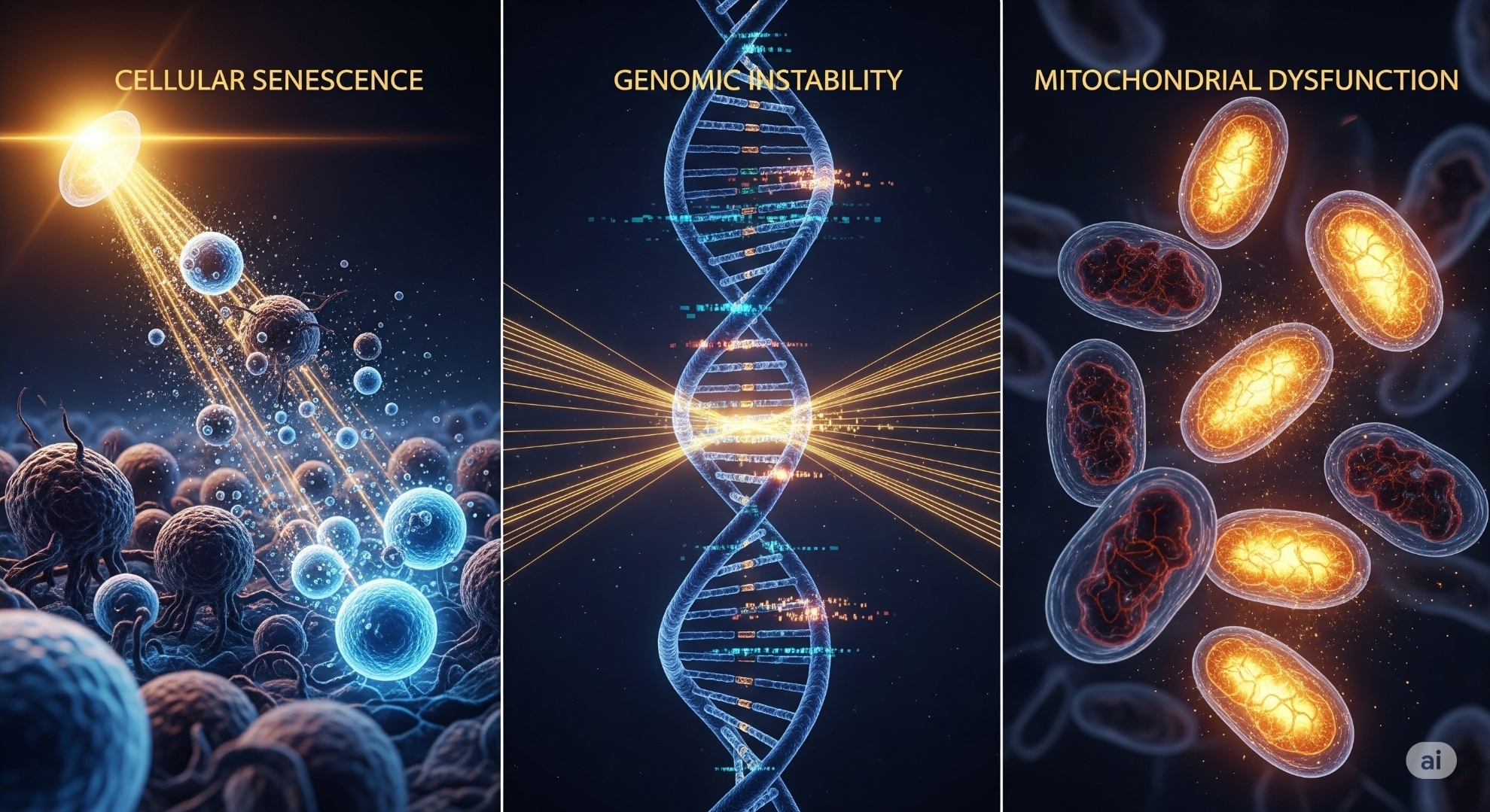
1. Zombie Cell Cleanup 🧟
Some cells refuse to die, spewing toxins and inflaming tissues—a cellular apocalypse that drives arthritis, heart disease, and more.
The Fix: Senolytics—drugs that hunt down these zombies. Trials show reversal of kidney damage in mice, stronger bones, even thicker fur. The Longevity Escape Velocity Foundation’s 2025 project, RMR2, is testing combos that could double mouse lifespans. Humans are next in line.
2. Polishing the Scratched CD 💿
Your DNA is the pristine CD. Epigenetics—the “player”—gets scratched, skipping instructions and garbling cell behavior.
The Fix: Harvard’s David Sinclair showed blindness reversed in mice by resetting cells to a youthful state. Partial reprogramming might one day make 60 feel like 30. Meanwhile, DeepMind’s AlphaFold is cracking protein puzzles in seconds, fueling drug discoveries once thought impossible.
3. Recharging the Cellular Batteries 🔋
Mitochondria—the cell’s power plants—rust with age. That’s why exhaustion shadows us as decades pile on.
The Fix: Mitophagy-boosting compounds clear out defective mitochondria, letting fresh ones thrive. Early animal studies show rejuvenated strength. Insilico’s AI platforms are cutting drug development cycles from years to days, compressing cost by a thousandfold.
The Near Future: Nanobots, AI, and Beyond 🤖
By the 2030s, futurists like Ray Kurzweil and George Church, plus entrepreneurs like Bryan Johnson, see a 70% shot at LEV by 2040. Nanobots could be patrolling bloodstreams, scrubbing plaque, zapping tumors, and reversing Alzheimer’s.
Quantum computing may soon model thousands of aging pathways in days, and some foresee digital immortality—mind uploads leaving biology behind.
But not all buy the hype. Biologists like Judith Campisi caution: mouse miracles rarely translate cleanly to humans. Aging is a symphony, not a single broken note. Still, the pace of progress feels undeniable.
The Big Question: Who Gets Forever?
Here’s the plot twist: immortality could split humanity.
Early treatments will cost fortunes, creating Amortals—century-spanning elites—while the rest age out like outdated tech. Would governments declare rejuvenation a human right, or will a new upper class rule for millennia?
And if death drives innovation (“science advances one funeral at a time,” said Max Planck), what happens when no one leaves the stage? Would society stagnate, ruled by immortal CEOs? Or would endless life unleash creativity across centuries?
Then comes overpopulation: Would eternal youth require strict global birth limits? Would people cling to life so tightly they stop taking risks—refusing to explore Mars for fear of a crash?
Philosophers warn: forever isn’t just biology, it’s psychology. Eternal life could mean eternal boredom—unless meaning itself evolves.
A Timeline for Our 2025 Baby
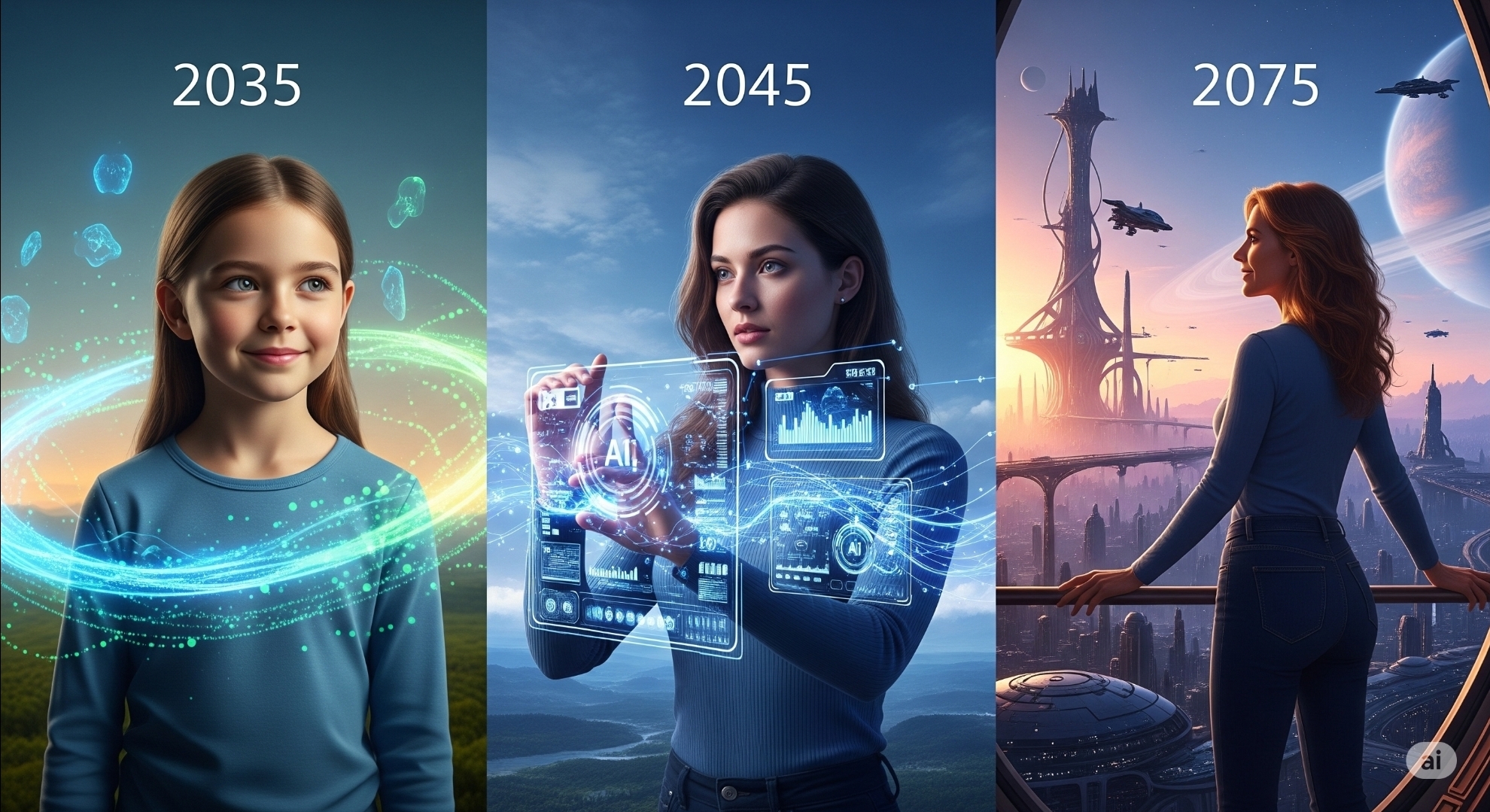
2035 (Age 10): Senolytics and mitochondrial boosters make aging a “manageable condition.” Her childhood is already tuned for resilience.
2045 (Age 20): Cellular reprogramming resets her bio-age; nanobots patrol like bodyguards. The singularity merges human and AI intelligence. She codes her own health upgrades.
2075 (Age 50): Aging is optional. She cycles through careers and identities, spanning centuries as humanity pushes toward the stars.
Experts peg her odds at 50–60% of hitting longevity escape velocity.
The Final Takeaway
This isn’t just about if we conquer aging, but what comes after. Immortality could mean centuries of discovery—or centuries of arguments on X.
For now, the bridge to that future is still built with old-school planks: sleep, exercise, and a healthy diet. Think of it as clearing the runway for the biotech revolution. That baby born today might live to show us what’s possible. Our job is simpler, and more urgent: stay alive long enough to join her.
Generated Article by LLA Founder Kevin Baird