Meet Lyra-7: A Portrait of Humanity in 1,000,000 AD
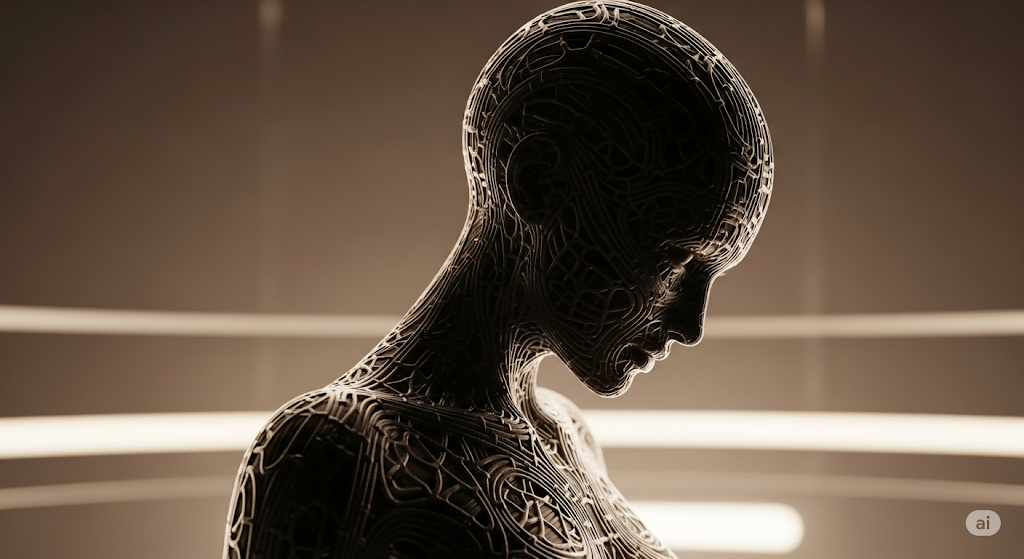
We’re already tinkering with age reversal and lab-grown embryos. Fast forward a million years, and the question won’t be if we survive—it’ll be whether the words "man" and "woman" mean anything at all. The biggest story isn't our future; it's the slow-motion death of our present biology. Let's project the tape forward and meet our descendant: Lyra-7.
She’s what happens when a million years of evolution and biotechnology refactor the human blueprint. To understand her is to understand the strange, beautiful, and perhaps lonely future we’re writing today.
The Body: From Biology to Bio-Design 🌀
Lyra-7's form is a solution to a new set of problems, built on technologies that exist in their infancy today.
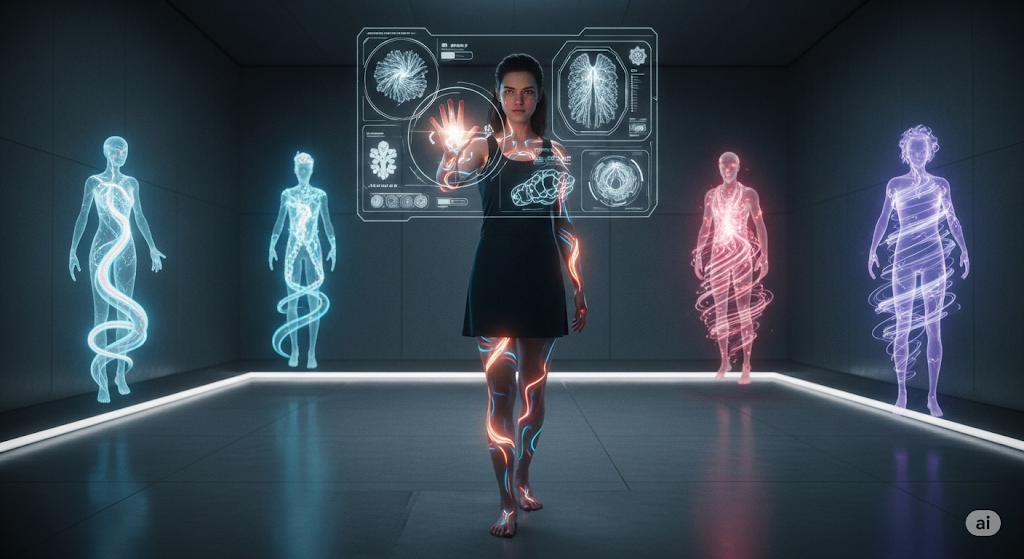
Silhouette: Tall and impossibly slender, her skeleton is a woven carbon-nanotube composite. This echoes today's DARPA-funded work on engineered living materials, which aims to grow, not build, complex structures. For Lyra-7, this tech has been internalized.
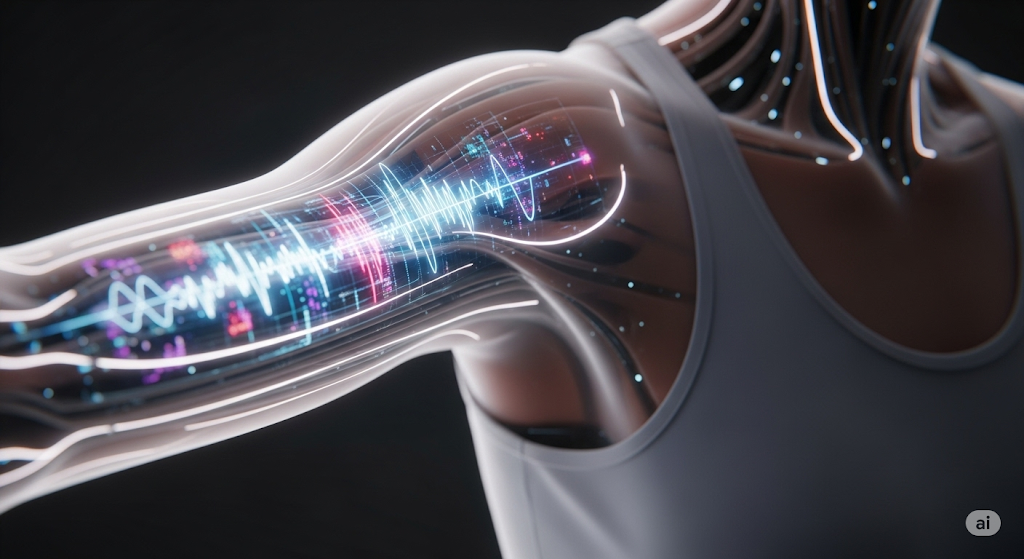
Skin: Her most striking feature is a semi-translucent, luminous interface. This is the ultimate evolution of MIT's "DermalAbyss" project—which used biosensitive dyes to display biometrics through skin color—merged with the logic of a Neuralink brain-computer interface.
Energy: She has no heartbeat; her energy is drawn from ambient cosmic radiation. This concept gained scientific credence with NASA's early 21st-century experiments in energy-harvesting nanomaterials for deep-space probes.
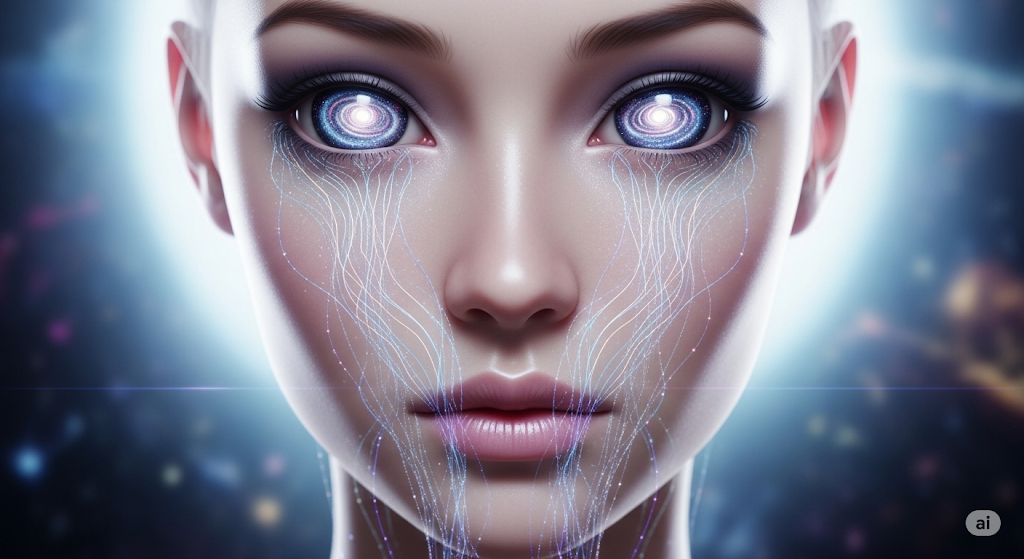
Face: Delicate and minimalistic, her features are designed for a post-verbal world. Her eyes are large, liquid-mercury orbs, revealing swirling galaxies of light—the output of a brain processing reality at impossible speeds.
Identity: Beyond Gender’s Ghost ♾️
The concept of a gender binary is a historical footnote, made obsolete by technologies and philosophies that are already taking root.
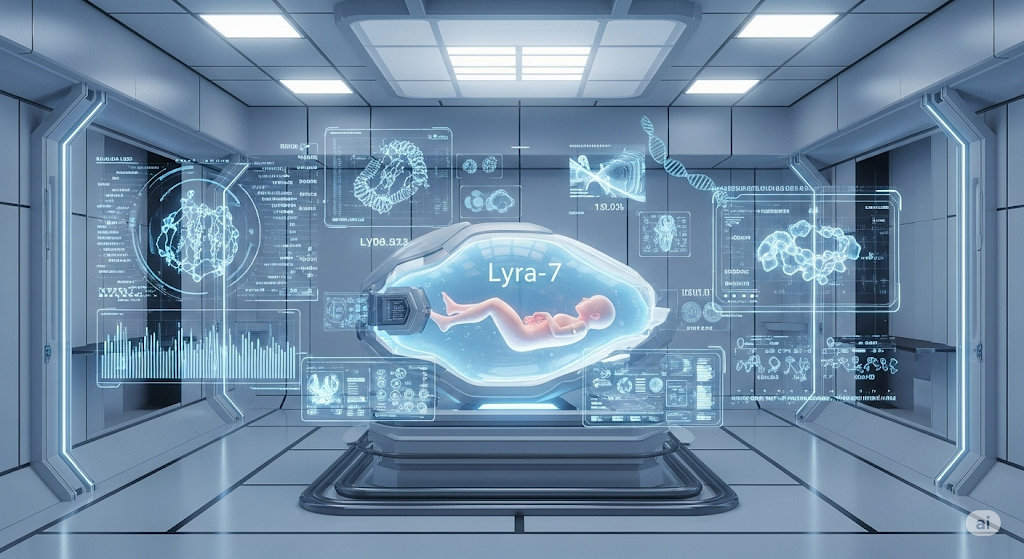
Reproduction is Ectogenesis: Pregnancy and childbirth are obsolete biological traumas. But what happens to intimacy when biology is fully outsourced? The path to the "Genesis Chamber" is already being paved; in 2025, researchers at the Weizmann Institute of Science had already grown mouse embryos in artificial wombs for half their gestation. A decade later, the first human ectogenesis prototype, built by a consortium including the Wyss Institute, sustained a primate fetus to full term. For Lyra-7, new individuals are grown while their genetics are optimized from day one.
The Body is a Canvas: Her identity is a conscious design choice. This leap began with today's VR and social platforms, where avatar culture taught us to decouple identity from a single physical body. Lyra-7 is the literal embodiment of that philosophy, her physical form the ultimate expression of a "protean self," a concept explored by sociologists like Kenneth Gergen to describe the multi-faceted identity of the modern era, now made fully real.
Intimacy: When Minds, Not Bodies, Connect 💞
With procreation outsourced, intimacy evolved beyond physical sex into something far more profound—and potentially invasive.
Neural Merging: The highest form of bonding is a direct mind-link, sharing memories and emotions without filters. But if you can share every thought, is privacy dead? Early experiments by researchers like Miguel Nicolelis at Duke University have already demonstrated basic brain-to-brain communication between rats. Lyra-7's reality is the endpoint of this field, connectomics, which aims to map and ultimately connect every neuron in the human brain.
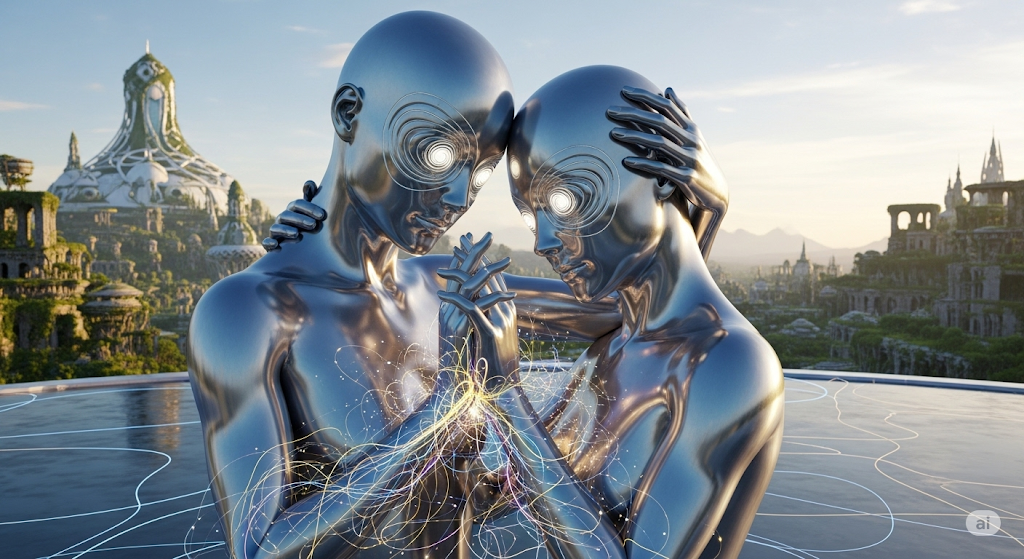
Sensory Weaving: Physical touch is now an art form. A touch is a conversation, as partners "weave" patterns of light and energy across their luminous skin. This is the culmination of haptic feedback technology from companies like TeslaSuit, elevated to an art form.
Parenting as Curation: A new consciousness is raised by a "Curation Circle"—a group that chooses to guide it. Your parents aren't who made you; they're who chose to love and teach you. Bonds are based on resonance, not genetics.
The Final Takeaway
This vision aligns with the predictions of futurists like Ray Kurzweil, who posited that the distinction between human and technology would blur into a singularity. But it also raises the ethical warnings of philosophers like Nick Bostrom, who asks if every utopia contains a hidden dystopia.
The edits we make today—in the code of our CRISPR enzymes, in the algorithms of our AI, and in the fragile consensus of our ethics—will decide whether she is a marvel or a monument to our folly. Lyra-7 is the question. Our present is the answer.
Generated Article by LLA Founder Kevin Baird