Understanding Florida's Lien Law: The 45-Day Notice to Owner Rule
For contractors and suppliers, getting paid for your work is the top priority. But what happens when a client or a general contractor doesn't pay? This is where Florida's Construction Lien Law comes in. It's a powerful tool designed to protect your right to payment by allowing you to place a claim against the property you improved. However, it's a game of strict rules and unforgiving deadlines. Missing even one step could mean losing your right to be paid.

What Is a Construction Lien?
At its core, a construction lien is a legal claim against a piece of real property. If you've furnished labor, services, or materials to improve a property, but you haven't been paid, a lien gives you a legal path to secure that payment. It creates a powerful incentive for the property owner to resolve the debt. To have these rights, you must hold the required contractor license.
The Three Critical Documents
Florida's lien law process revolves around three key documents, each with a strict purpose and timeline.
Notice of Commencement (NOC): This document is the starting gun for a project. The owner or lender records it and must post it at the job site. The NOC establishes a clear starting date and provides crucial information about the project that you will need to serve your other notices.
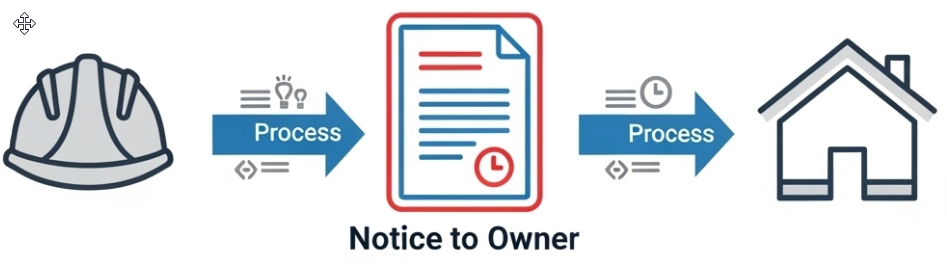
The Notice to Owner (NTO): This is the most critical document for subcontractors and suppliers who do not have a direct contract with the property owner. Its purpose is to officially notify the owner that you are a part of the project and that you intend to preserve your right to a lien if you aren't paid.
The Claim of Lien: This is the final and formal claim that is recorded in the public records if you have not been paid. It must be prepared and recorded carefully within a specific timeframe.
The Unforgiving 45-Day Rule
For subcontractors and suppliers, the Notice to Owner is your most powerful tool, but it's bound by an unforgiving deadline. The law states that your NTO must be received by the owner no later than 45 days after you first furnish labor, services, or materials to the job site. This is a hard deadline. If you miss it, you forfeit your right to file a lien.
For this reason, diligent record-keeping and proactive communication are non-negotiable parts of your business. Your NTO must be served on all the appropriate parties through a legally prescribed method, so every detail matters.
Penalties and Final Thoughts
The stakes are high. Filing a fraudulent lien or misapplying construction funds are serious offenses that can be prosecuted as felonies in Florida. It's a reminder that integrity and diligence are paramount in this industry.
Understanding the strict rules and deadlines of Florida's lien law is essential not just for protecting yourself, but for ensuring you operate an ethical and compliant business.
Ready to confidently navigate the legal side of your contracting business?

Generated Article by LLA Founder Kevin Baird