E-Read 1: Estimating & Bidding Methods
(Estimated Reading Time: 40-45 minutes)
Before you can build, you must bid. Estimating is the process of forecasting the costs required to complete a project in accordance with the plans and specifications. It is a blend of art and science, requiring both technical skill and sound judgment. A bid that is too high will lose the job, while a bid that is too low can bankrupt a company. This section covers the fundamental methods used to create accurate estimates and the formal process for submitting them as a competitive bid.
I. Estimating Methods
-
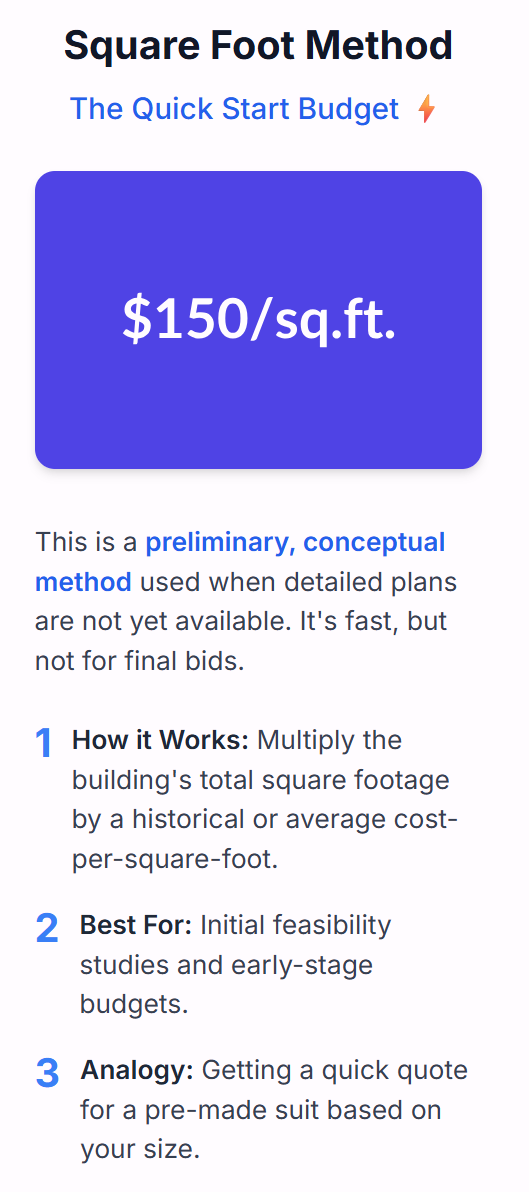
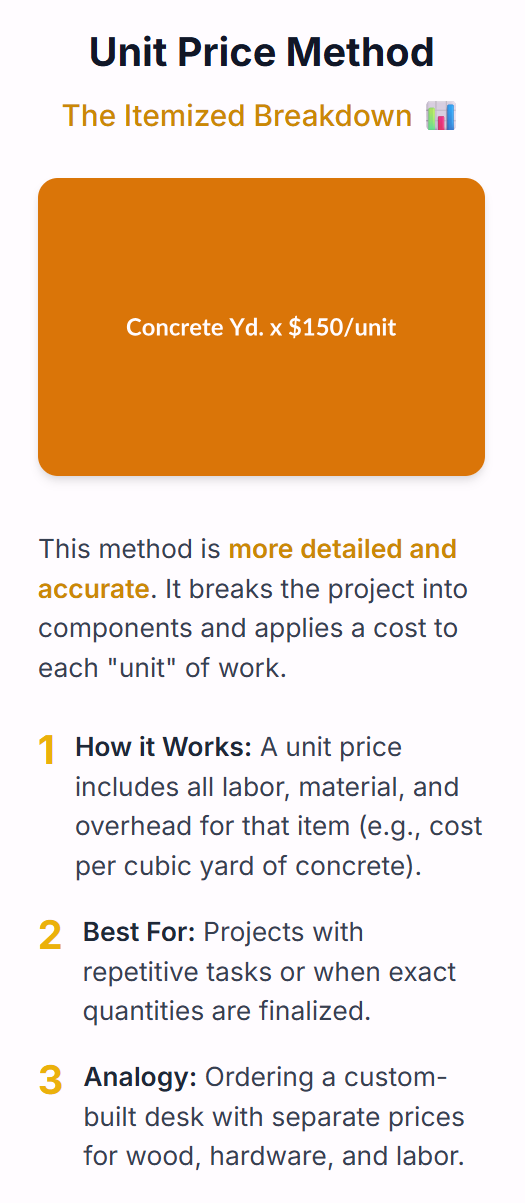
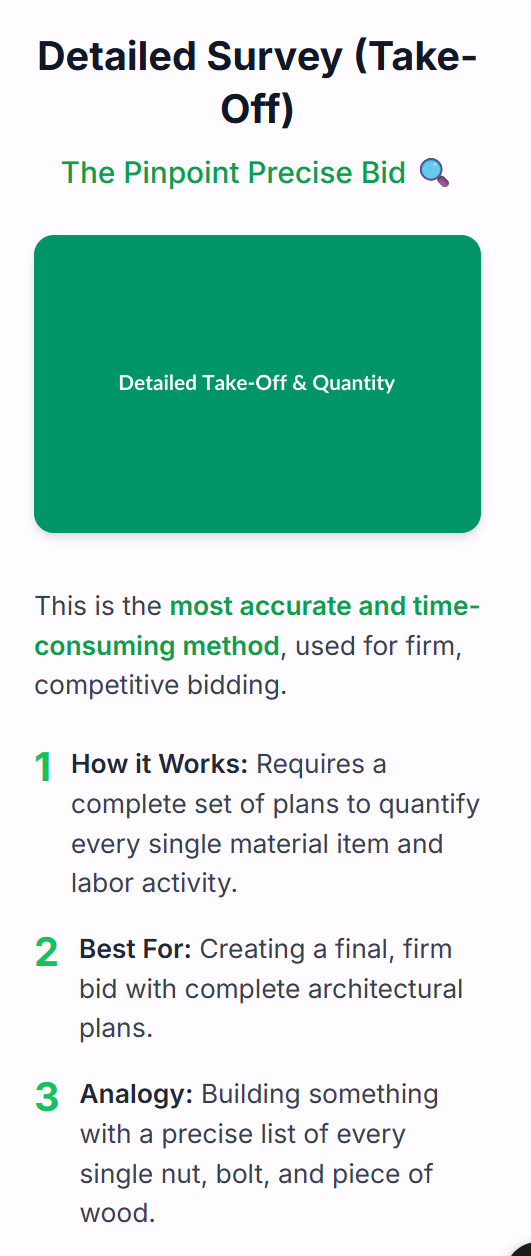
There is no single way to estimate every project. The right method depends on the project's stage, the available information, and the required level of accuracy. The three primary methods you will encounter are the Square Foot, Unit Price, and Detailed Survey methods.
Case Study Application:
Brian the Builder is asked by a homeowner for a preliminary budget for a residential addition. To provide a quick, ballpark figure, he uses the Square Foot method based on recent addition projects in the area.
-
In contrast, Carlos the GC is preparing a formal, competitive bid for a commercial tenant build-out. To ensure his bid is accurate and profitable, he must use the Detailed Survey method, performing a meticulous take-off from the complete set of plans.

II. The Bidding Process: Following the Rules
The bidding process is the formal procedure for submitting a proposal to the owner to execute the work for a specified price. This process is governed by a set of documents and rules designed to ensure fairness and transparency. The AIA Document A701, Instructions to Bidders, is a critical reference that provides the "rules of the game" for the bid.
The Bidding Documents, as defined in A701, include all materials necessary to prepare a bid, such as the advertisement or invitation to bid, the Instructions to Bidders, the bid form itself, and the Proposed Contract Documents (the unexecuted Agreement, Conditions of the Contract, Drawings, Specifications, and all Addenda).
Key elements you must master for the exam include:
Addenda: These are written or graphic instruments issued by the architect before the bid is submitted to clarify, correct, or change the Bidding Documents. You are responsible for acknowledging receipt of all addenda in your bid.
Bid Security: This is a financial guarantee that the selected bidder will enter into the contract if they are awarded the job. It is typically a bid bond for a percentage of the bid amount (often 5%). If the winning bidder backs out, the owner can claim the bond to cover the cost difference of selecting the next-closest bidder.
Modification or Withdrawal of Bid: A701 outlines the strict procedures for changing or withdrawing a bid. A bid may be modified or withdrawn by written notice delivered to the location designated for bid receipt prior to the bid deadline. After the deadline, bids cannot be modified, and withdrawal is only permitted under very specific circumstances, such as a verifiable clerical error.
Look-Up Practice:
Open your AIA Document A701. Locate Article 1, "Definitions," and Article 4, "Bidding Procedures."
In your Exam Success Workbook, note the specific sections that define Addenda and the rules for modifying a bid. This is a classic look-up skill tested on the exam.
Case Study Application:
-
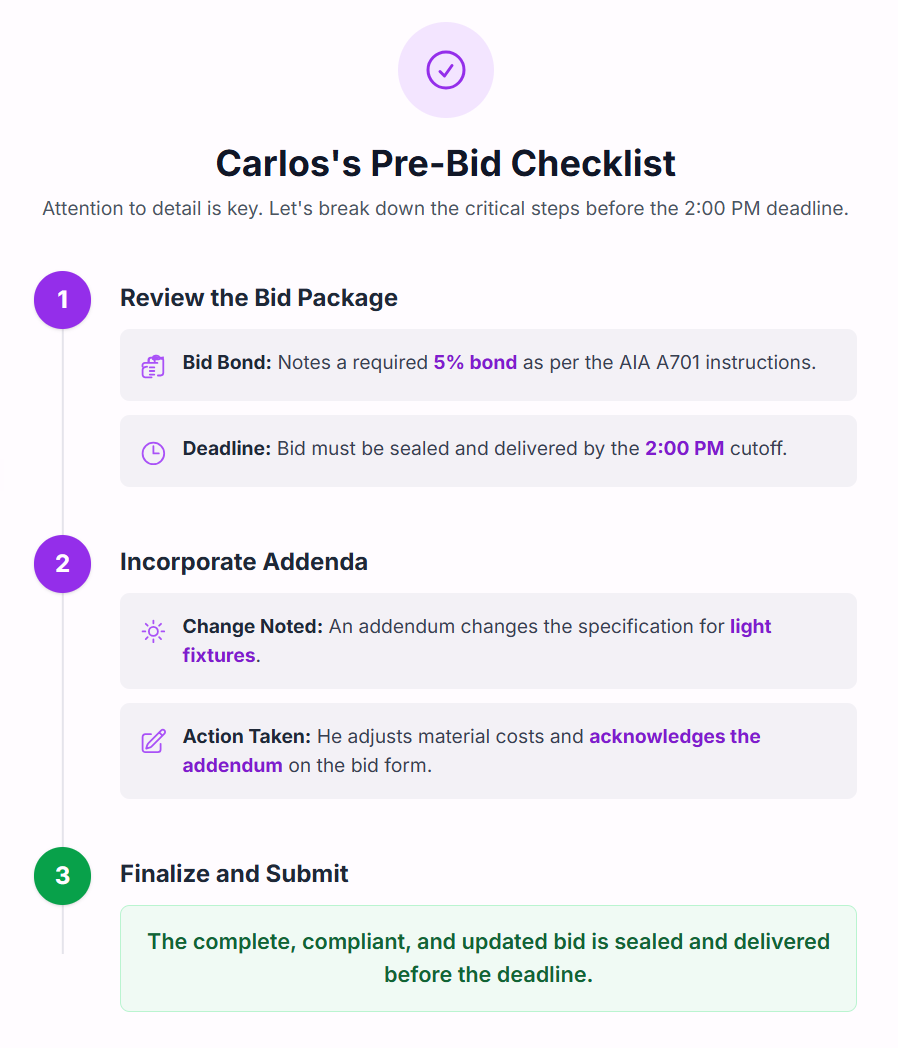
Carlos carefully reviews the bid package for the commercial build-out. He reads the AIA A701 and notes that a 5% bid bond is required, and the bid must be sealed and delivered by 2:00 PM on the specified date. Two days before the deadline, he receives an Addendum detailing a change in the specified light fixtures. He adjusts his bid accordingly and ensures he acknowledges the addendum on the bid form.