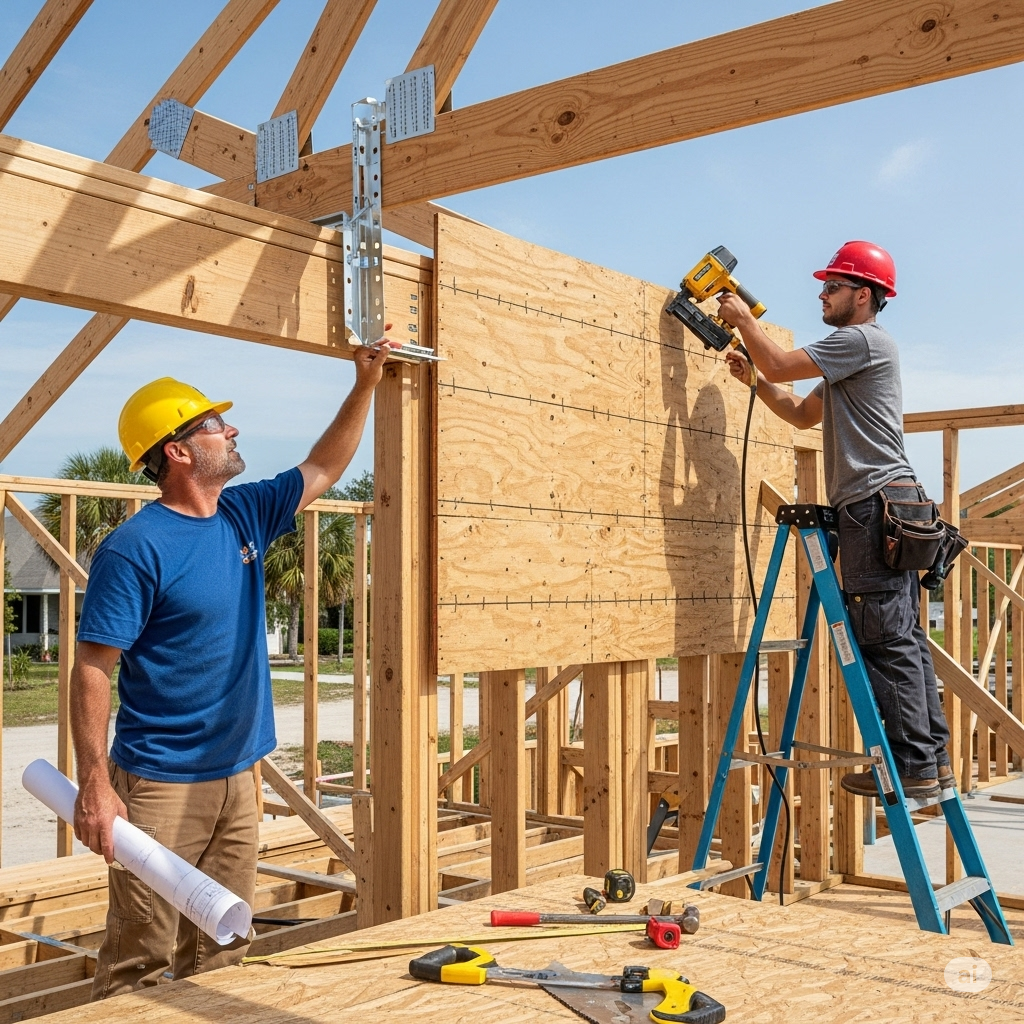
E-Read 1: Wood Framing
(Estimated Reading Time: 40-45 minutes)
Wood framing is a cornerstone of residential construction and is also used in many light commercial buildings. Understanding the properties of lumber, how to apply span tables, and the critical role of timber connectors is essential for any contractor.
I. Wood Lumber: Types, Grades, and Properties
Wood lumber is a versatile and widely used construction material, but its properties vary significantly based on species, grade, and treatment.
-
Lumber Species and Grades:
Species: Different wood species (e.g., Southern Pine, Douglas Fir, Spruce-Pine-Fir) have varying inherent strengths, stiffnesses, and durability. Southern Pine is common in Florida due to its strength and availability.
-
Grades: Lumber is graded based on its visual characteristics (knots, checks, wane) or by machine-stress rating (MSR). Grades indicate the structural properties (strength, stiffness) of the lumber. Higher grades generally have fewer defects and greater strength.
Machine-Stress Rated (MSR) Lumber: Graded by machines that measure stiffness (Modulus of Elasticity, E) and strength (bending stress, F). This provides more precise and reliable structural properties than visual grading.
-
Key Mechanical Properties:
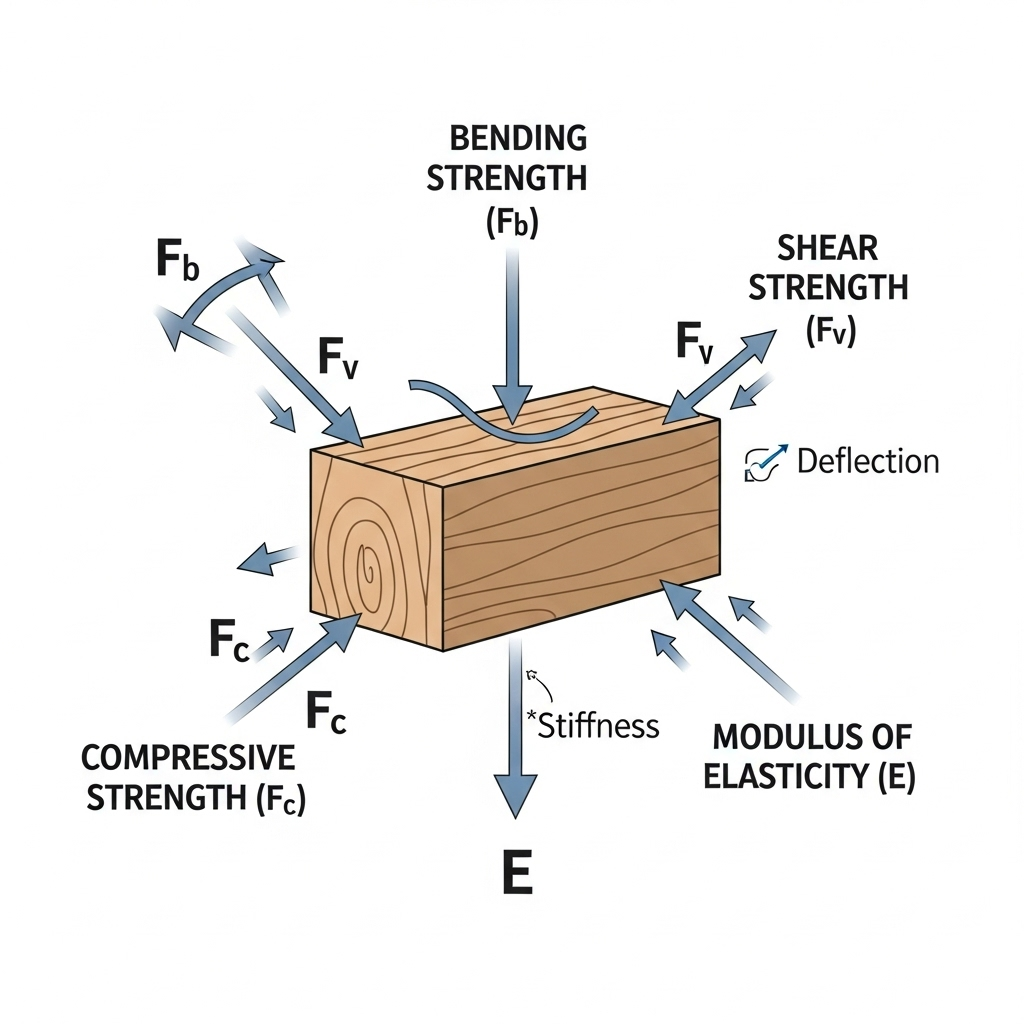
Bending Strength (Fb): The ability of a beam to resist forces that cause it to bend or sag.
Shear Strength (Fv): The ability of wood to resist forces that cause one part to slide past another.
Compressive Strength (Fc): The ability of a column to resist forces that compress it along its length.
Modulus of Elasticity (E): A measure of stiffness. A higher E-value means the wood is stiffer and will deflect less under load.
-
Dimensional Stability and Moisture Content:
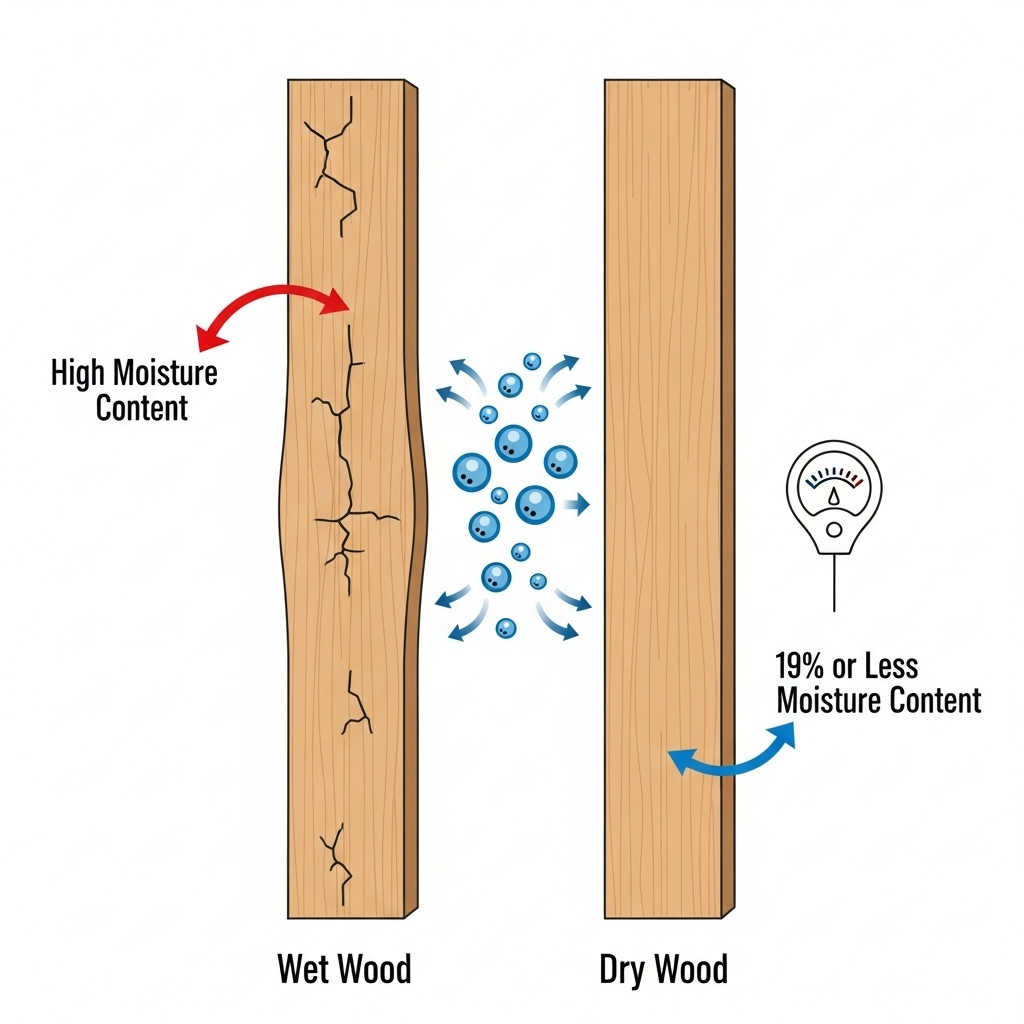
Wood naturally expands and contracts with changes in moisture content. Lumber is typically dried to a specific moisture content (e.g., 19% or less for framing lumber) to minimize shrinkage and warping after installation.
-
Fire-retardant-treated wood must be dried to 19% or less for lumber and 15% or less for structural panels before use, as per the Florida Building Code (FBC).
-
Preservative-Treated Wood:
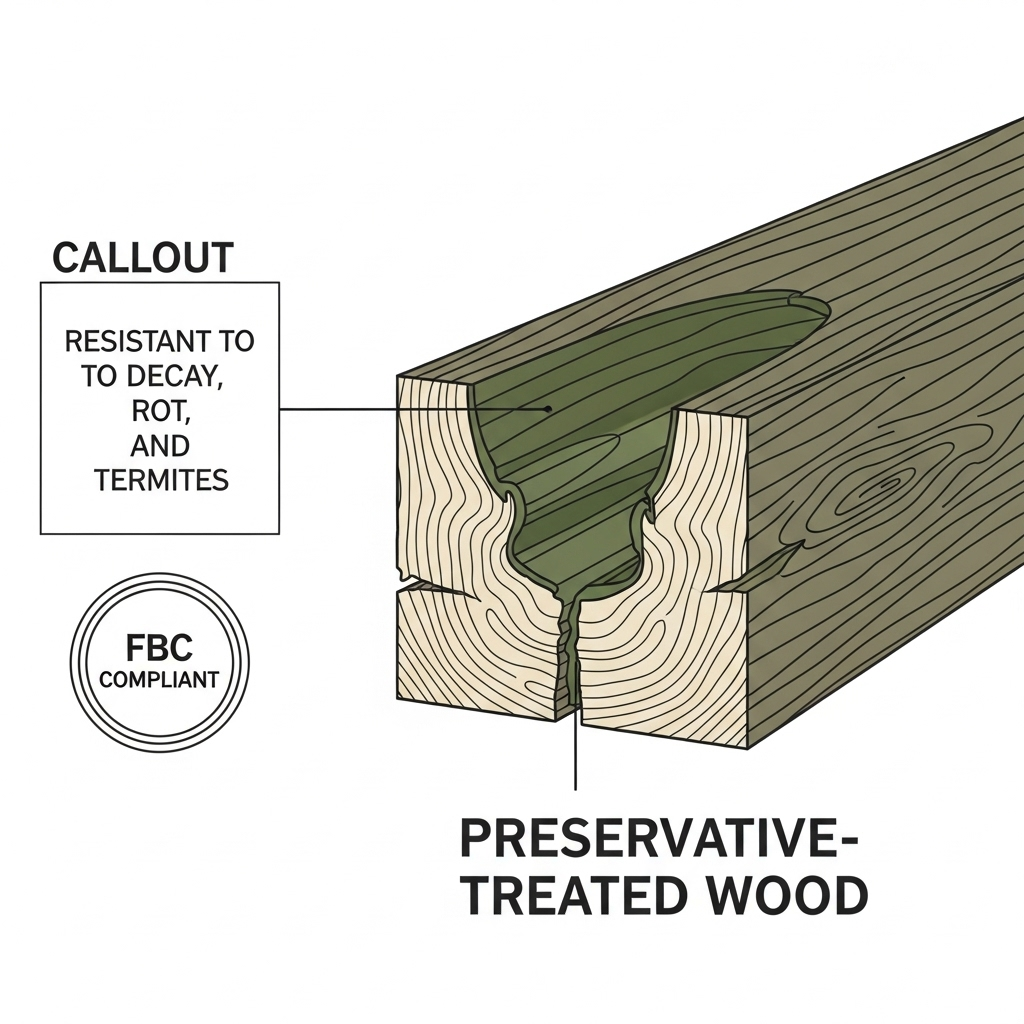
In Florida's humid climate, wood exposed to frequent wetting or in contact with masonry/concrete is often required to be pressure-treated with preservatives to resist decay, rot, and insect (especially termite) infestation. The FBC mandates this for stud partitions subject to frequent wetting.
-
Douglas Fir heartwood is naturally durable and resistant to decay, insects, and fungi.
Case Study Application:
-
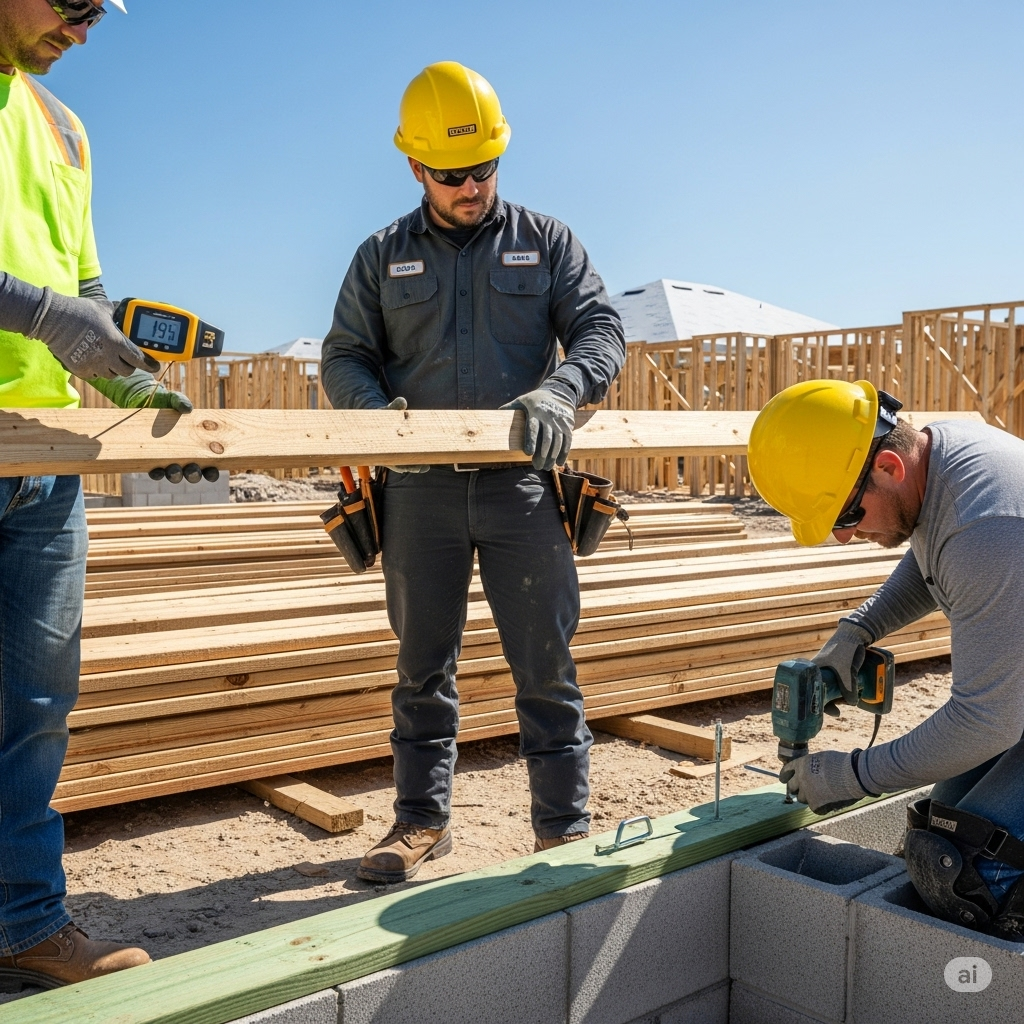
Brian the Builder is framing a residential addition in Fort Myers. He selects Southern Pine lumber for his floor joists and wall studs, ensuring it is properly kiln-dried to a moisture content of 19% to minimize future shrinkage and nail pops. For any wood in contact with his CMU stem wall, he specifies pressure-treated lumber to prevent rot and termite damage.
II. Wood Framing Principles and Span Tables
Wood framing involves assembling individual lumber members into a stable, load-bearing system.
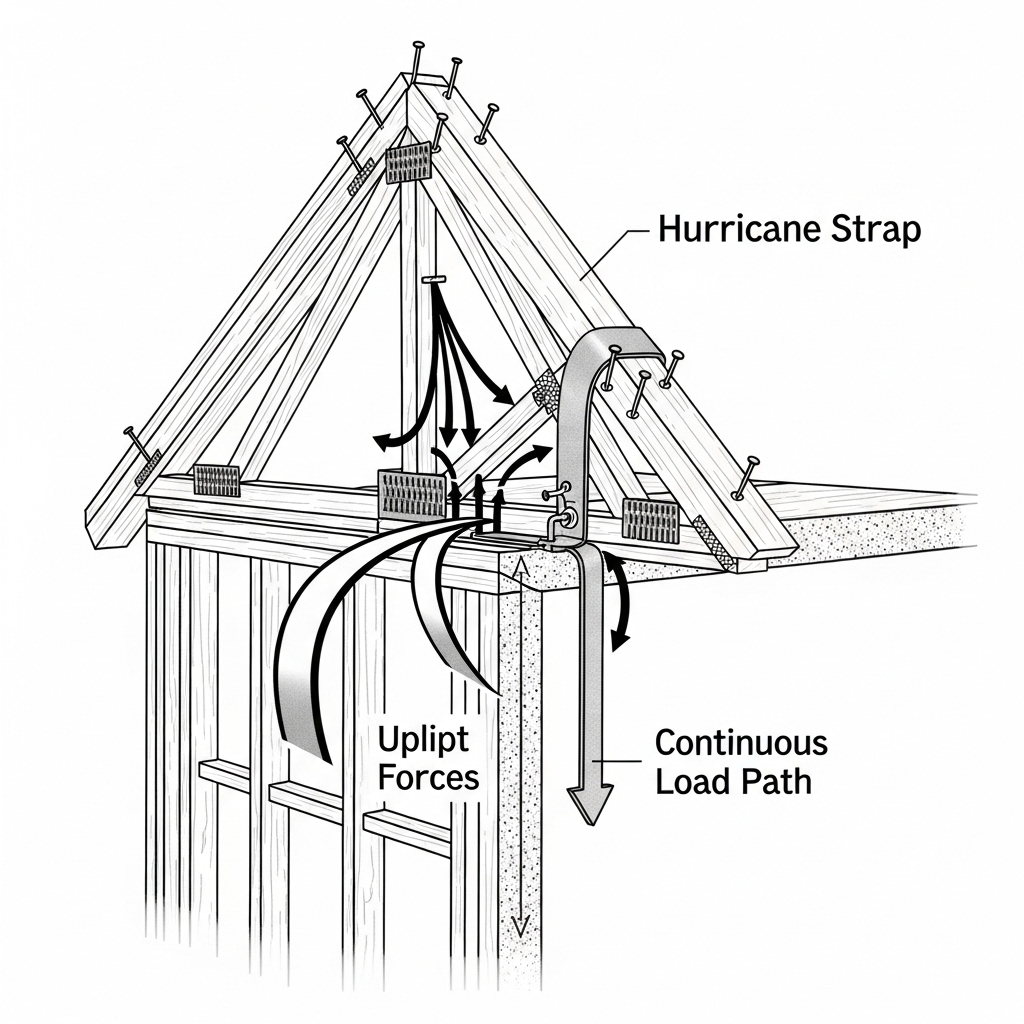
Load Path: Understanding how loads (dead, live, wind, seismic) are transferred from the roof, through the floors and walls, down to the foundation is fundamental. A continuous load path is critical, especially for resisting uplift forces from high winds in Florida.
-
Floor Framing:
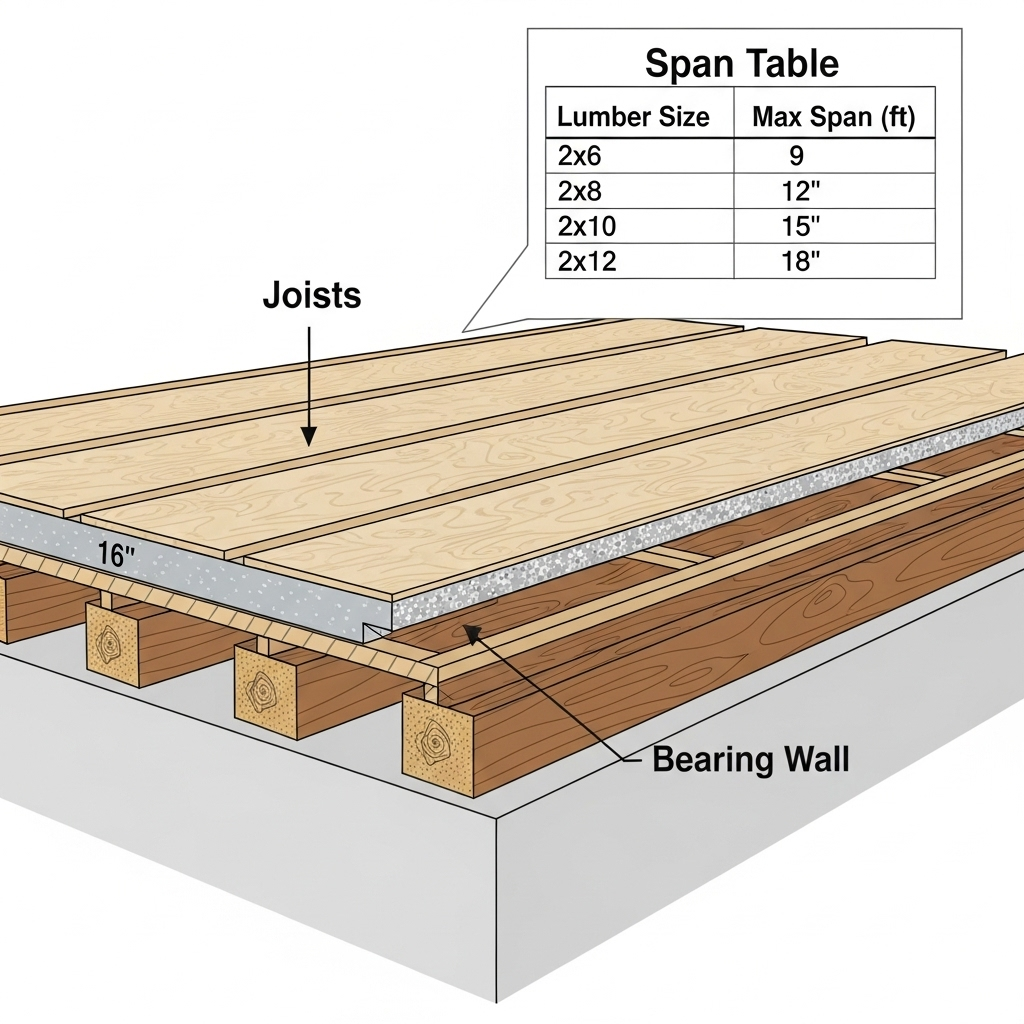
Joists: Horizontal members that support floor loads and transfer them to beams or bearing walls. They are typically spaced 12, 16, or 24 inches on center.
-
Span Tables: The Florida Building Code (FBC) provides span tables that specify the maximum allowable span for different lumber sizes, grades, and species based on the loads they will carry and the allowable deflection. Using these tables correctly is crucial for ensuring structural integrity and code compliance.
-
Wall Framing:
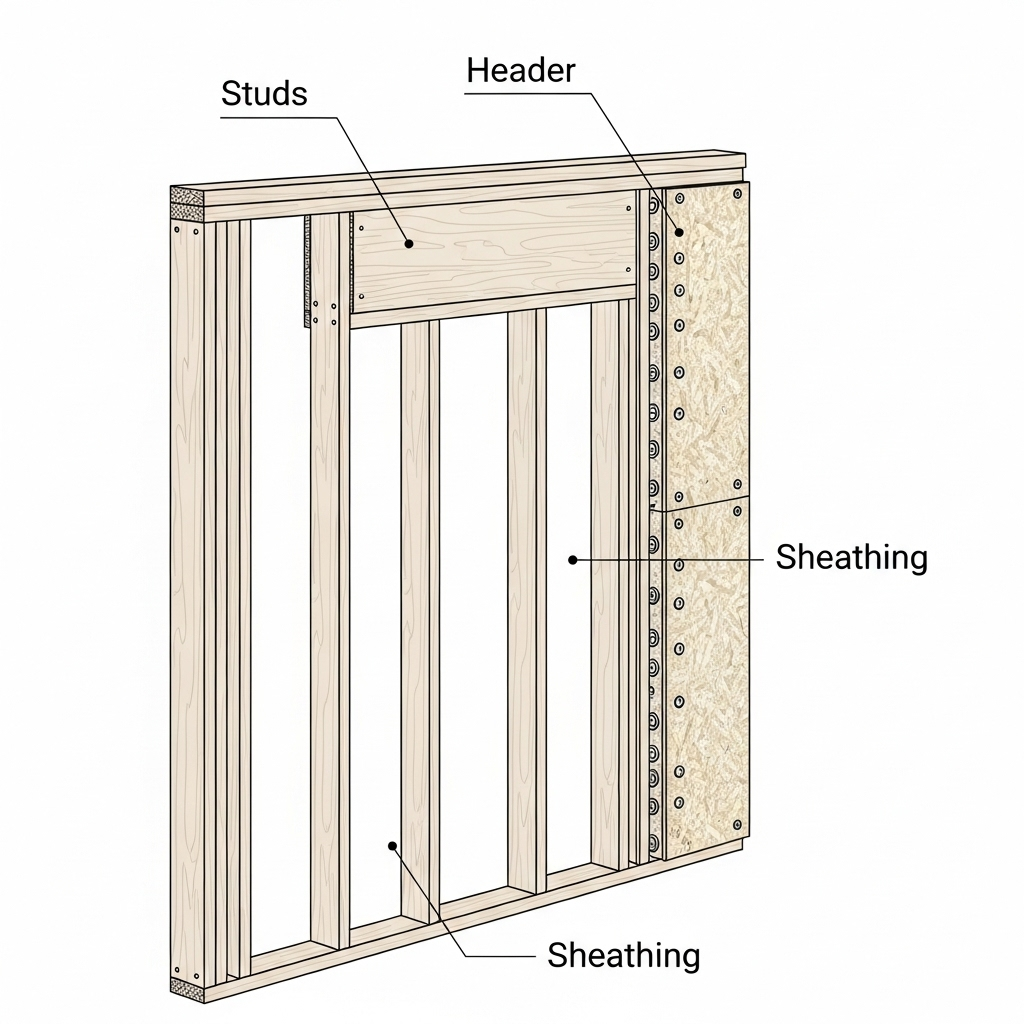
Studs: Vertical members that form the walls, supporting vertical loads from floors and roofs, and resisting lateral loads (wind).
Headers/Lintels: Horizontal members spanning over openings (windows, doors) to transfer loads around the opening to the adjacent studs.
-
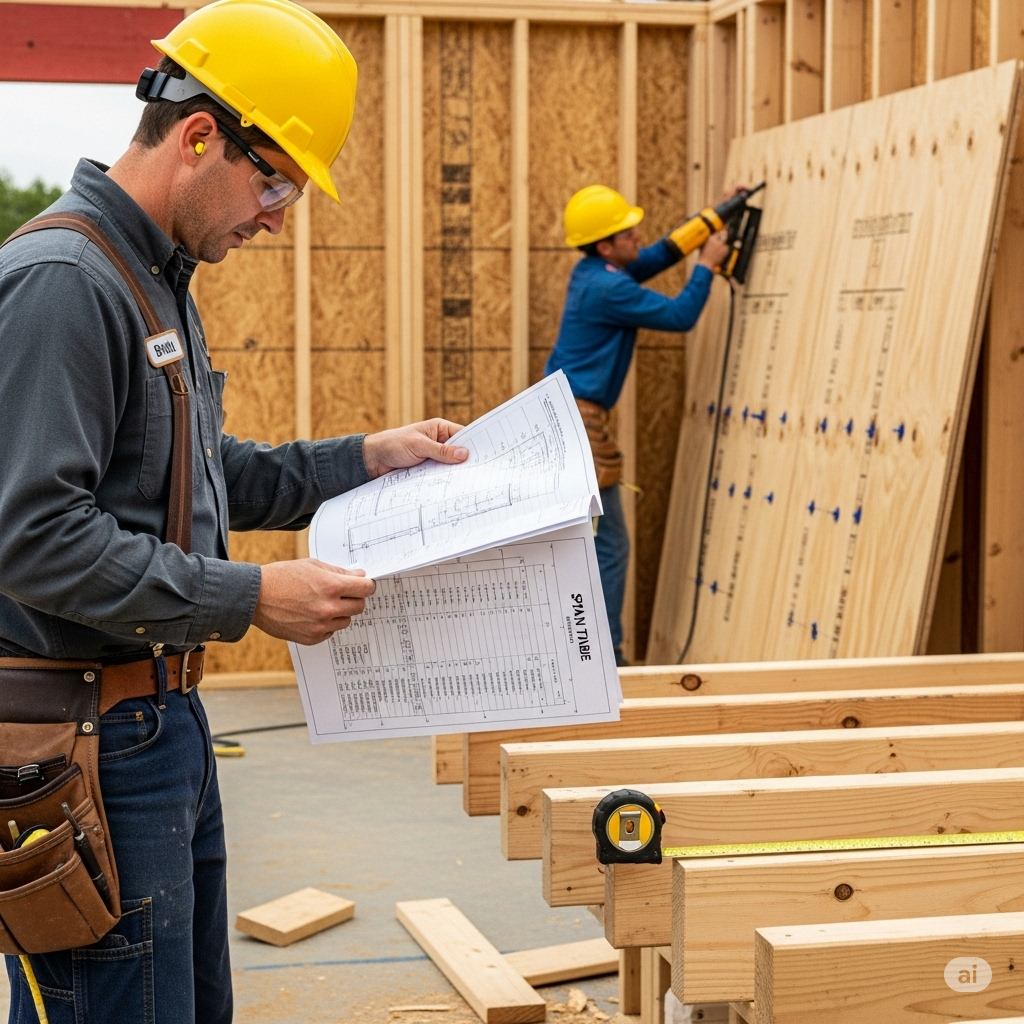
Shear Walls: Walls designed to resist lateral forces (wind, seismic) by transferring them to the foundation. Plywood or OSB sheathing is typically used to create a rigid diaphragm.
-
Roof Framing:
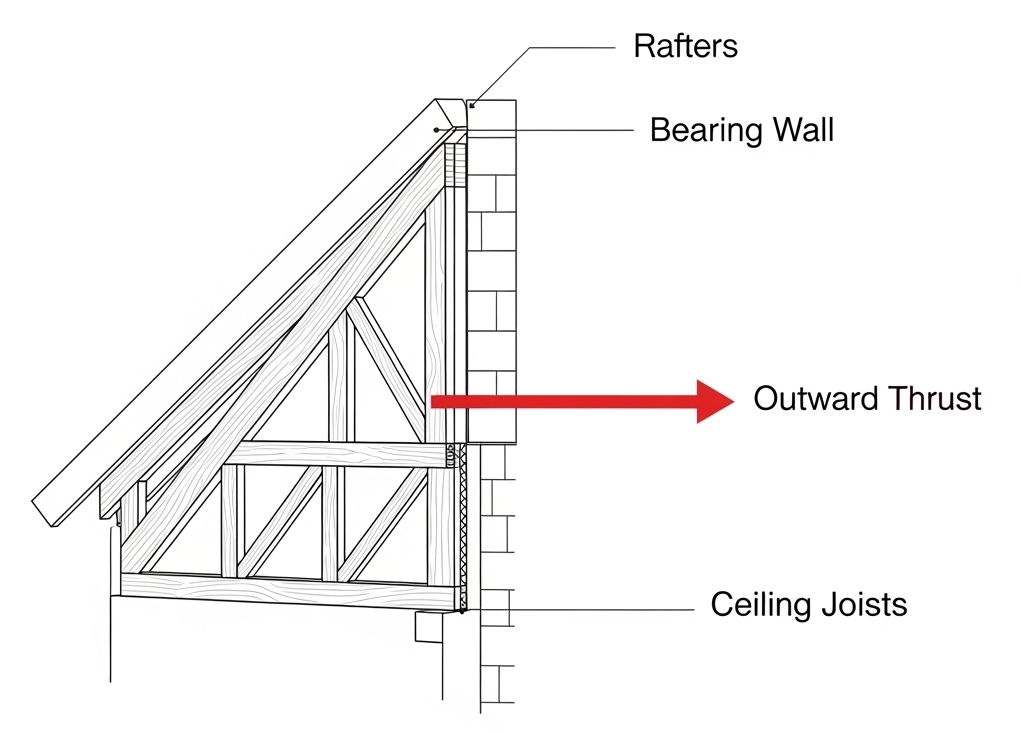
Rafters: Sloped members that support the roof deck and transfer roof loads to bearing walls or beams.
Ceiling Joists: Horizontal members that support ceiling finishes and often tie the bottom of opposing rafters together to resist outward thrust.
-
Trusses: Prefabricated engineered components that form the roof structure. We'll cover these in detail in the next section.
-
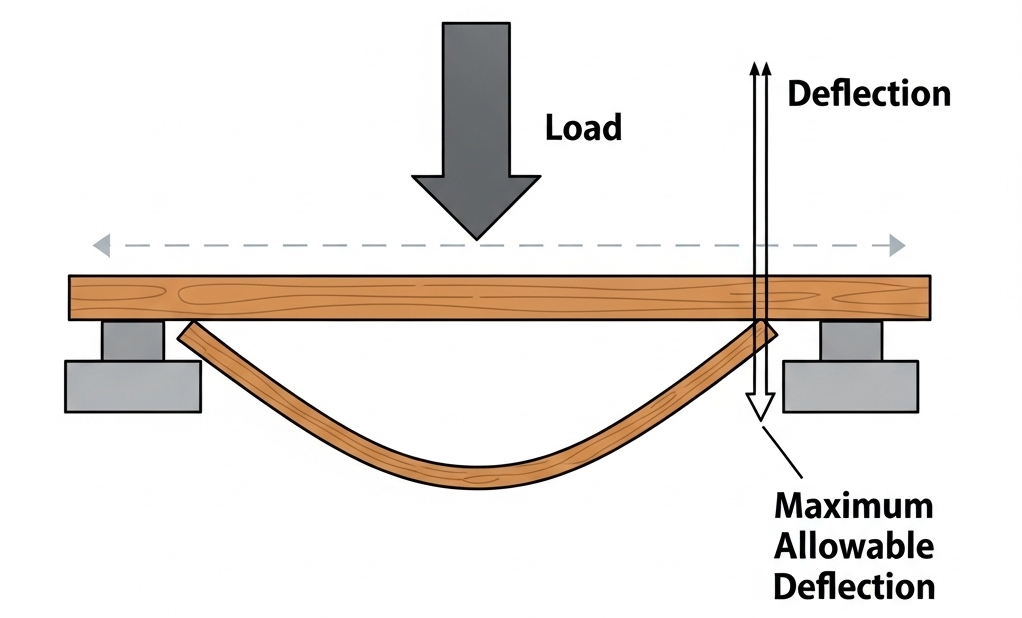
Deflection: The amount a structural member bends under load. Building codes specify maximum allowable deflections to ensure serviceability and prevent damage to non-structural elements (e.g., plaster cracking). The FBC provides limits for deflection.
Case Study Application:
-
Brian uses the FBC span tables to select the correct size of floor joists for his residential addition, ensuring they meet the deflection limits for the specified live and dead loads. He designs his exterior walls as shear walls, using plywood sheathing with the correct nailing pattern to resist Florida's wind loads.
III. Timber Connectors and Fasteners
Timber connectors and fasteners are crucial for creating strong and durable joints in wood framing, especially in Florida's high-wind environment.
-
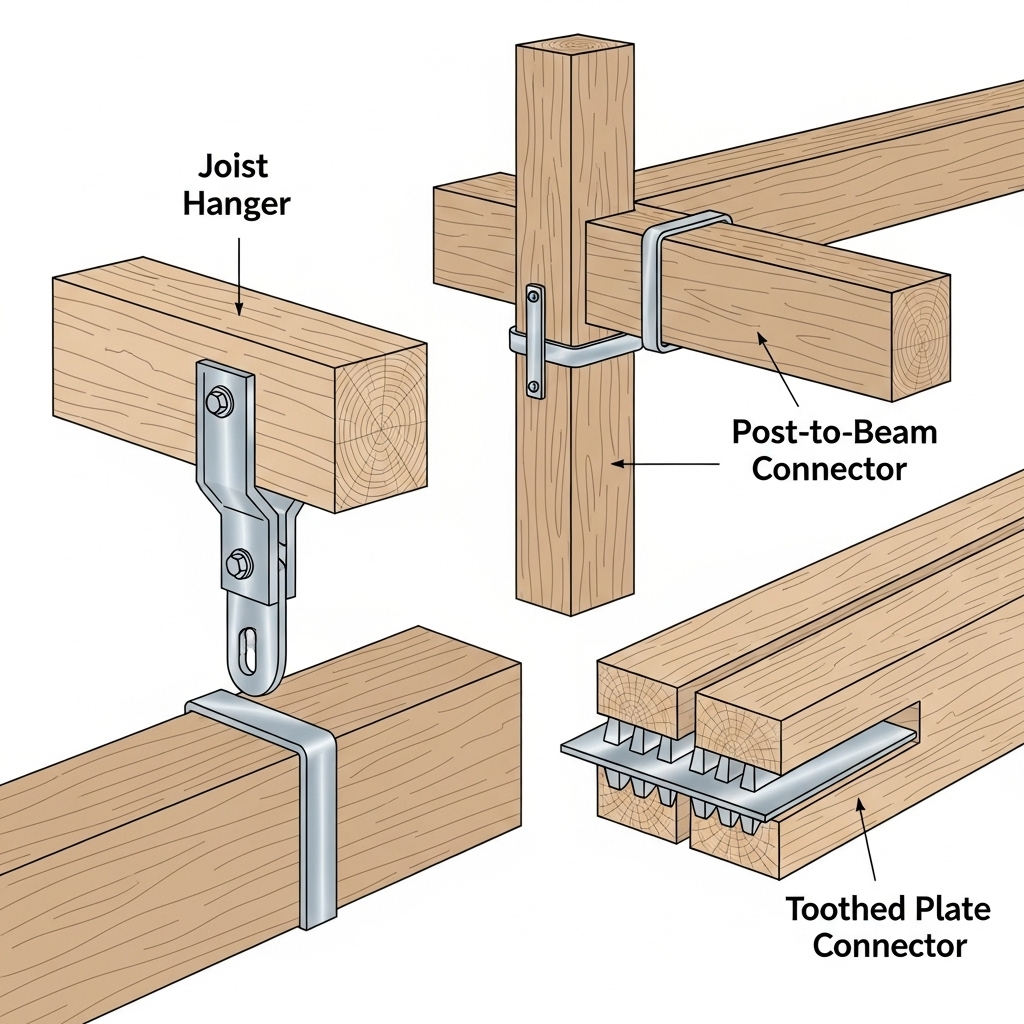
Timber Connectors: Building accessories (typically stainless steel or pre-galvanized steel) that enhance the strength of wood-to-wood and wood-to-steel connections, reducing the number of bolts needed.
Toothed Plate Connectors: Sharp teeth hydraulically pressed into wood, reinforced with bolts. Used in laterally loaded timber-to-timber or steel-to-timber connections.
Post-to-Beam Connectors (e.g., T-Connectors): Securely fasten posts to beams or concrete bases, ensuring critical load path continuity.
Joist Hangers: Metal connectors supporting joists where they intersect with beams or ledger boards.
Multi-beam and Diagonal Connectors: Used where multiple beams converge or for knee bracing and diagonal support.
-
Hurricane Straps (Hurricane Ties): Specialized metal ties engineered to connect roof trusses/rafters to walls, and walls to foundations, establishing a continuous load path to resist uplift forces from high winds. They transfer forces to the nails in shear, where nails have higher resistance to pull-out.
-
FBC Mandate: The Florida Building Code (FBC) mandates the establishment of a "continuous load path" that efficiently transmits wind loads from the roof, through the walls, and down to the foundation. Hurricane straps are a cornerstone of this.
-
-
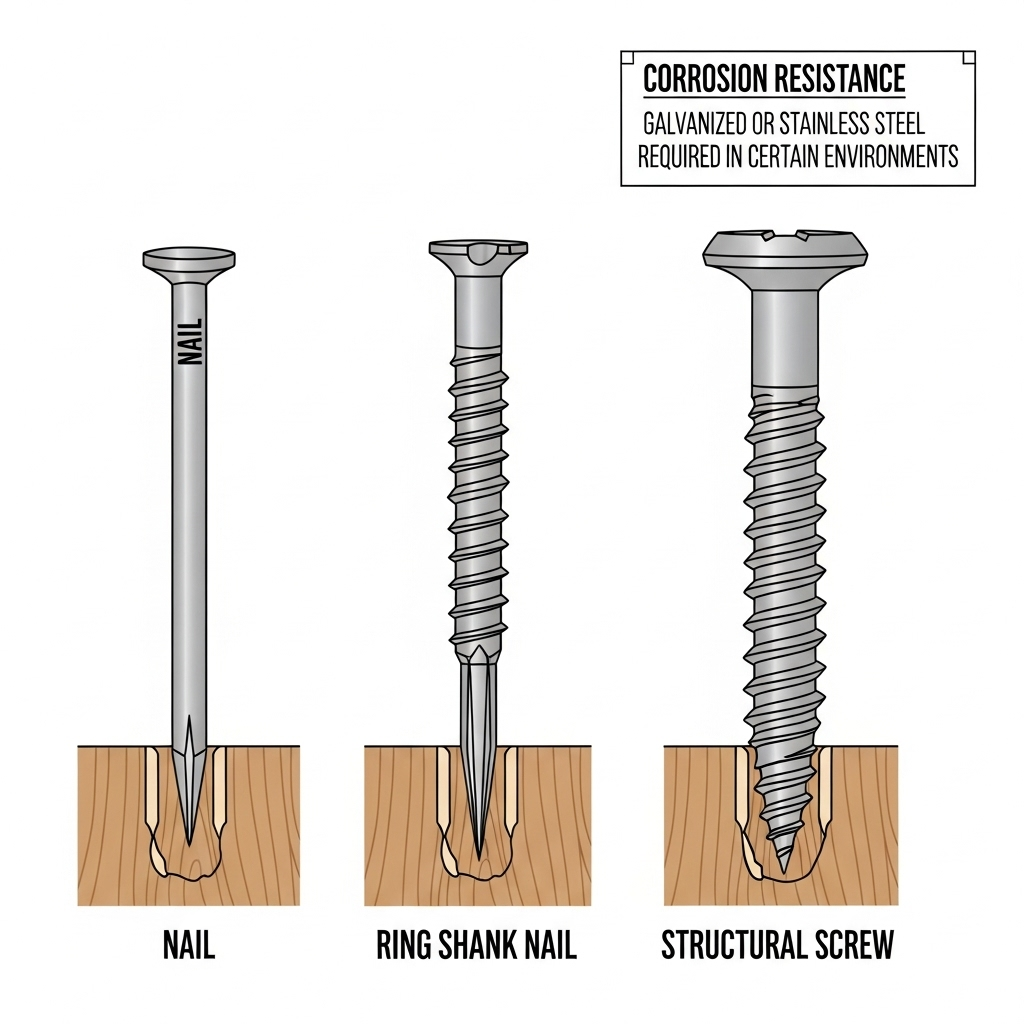
Fasteners: Nails and screws are fundamental.
Nails: Generally provide better shear strength. Ring shank nails offer superior pull-out resistance, especially beneficial in high-wind applications and for roof sheathing.
Structural Screws: Offer superior holding power and ease of installation.
Corrosion Resistance: In Florida's humid and coastal environments, galvanized or stainless steel fasteners are critical for corrosion resistance.
-
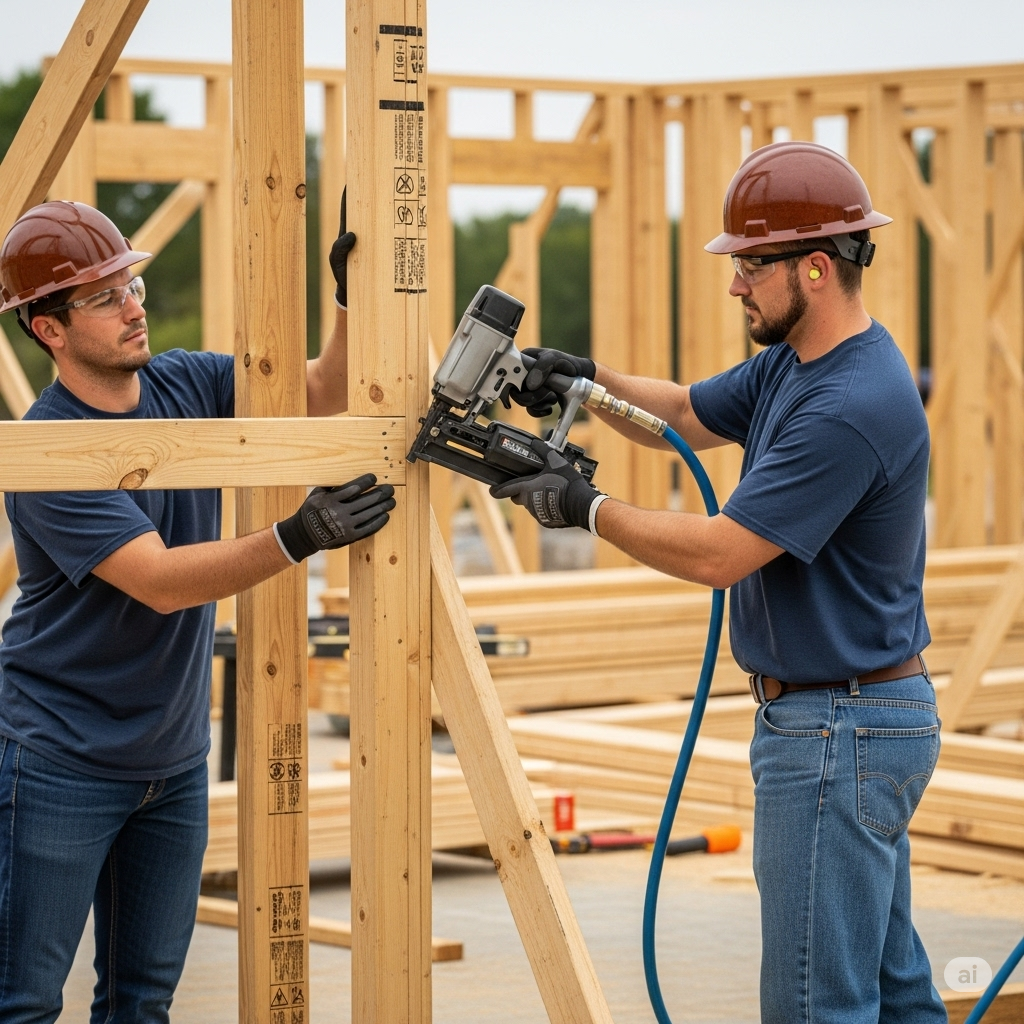
OSHA Safety for Fastening: OSHA (29 CFR 1926) mandates safe operation of power tools (nail guns, impact drivers) and proper grounding. Workers must use appropriate Personal Protective Equipment (PPE), including eye protection (safety glasses, goggles) and head protection (hard hats). Positive placement nailers are designed to prevent accidental firing and ensure fasteners are properly seated.
Case Study Application:
-
Brian ensures his crew uses hurricane straps to connect the roof rafters of his residential addition to the top plates and wall studs, creating a continuous load path to resist wind uplift. He also specifies 8d ring shank nails for fastening the plywood roof sheathing, adhering to the FBC's enhanced nailing schedule for high-wind resistance.