E-Read 1: Building Envelope & Energy Efficiency
(Estimated Reading Time: 45-50 minutes)
The building envelope is the physical separator between the conditioned interior and the unconditioned exterior. It includes the roof, walls, windows, and foundation. A well-designed and constructed building envelope is crucial for energy efficiency, moisture control, and overall occupant comfort, especially in Florida's hot and humid climate.
I. Energy Efficiency Principles: R-Value, U-Value, and Thermal Bridging
Understanding how heat moves through building materials is fundamental to designing and constructing energy-efficient structures.
-
R-Value (Thermal Resistance):
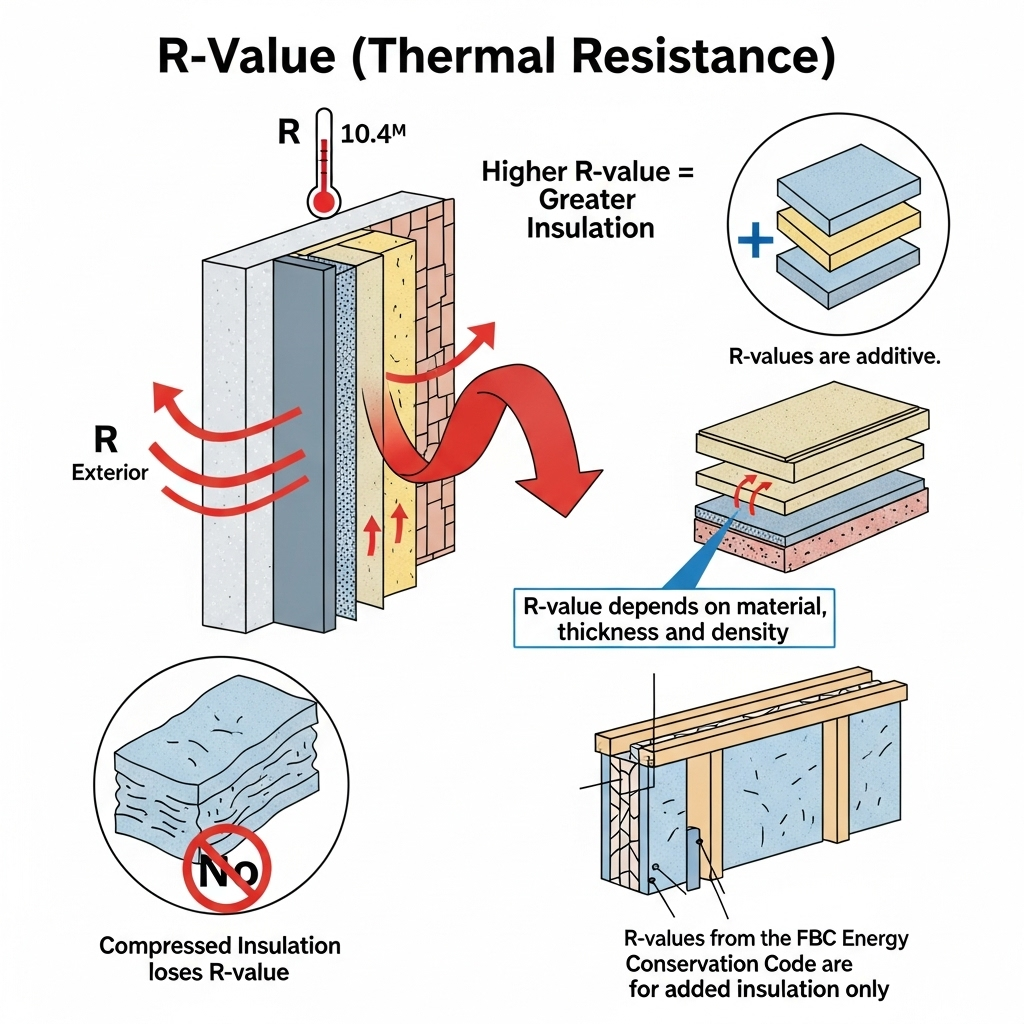
The measure of a material's resistance to heat flow by conduction. The higher the R-value, the greater the insulating effectiveness.
R-values are additive for multiple layers of insulation.
The R-value of thermal insulation depends on the type of material, its thickness, and density.
Important Note: R-values referenced in the Florida Energy Conservation Code refer to the R-values of the added insulation only. The R-values of structural building materials (like framing members, concrete blocks, or gypsum board) are generally not included in this calculation.
-
Compressed Insulation: Insulation that has been compressed to 85% or less of the manufacturer's rated thickness will not provide its full rated R-value.
-
U-Value (U-Factor):
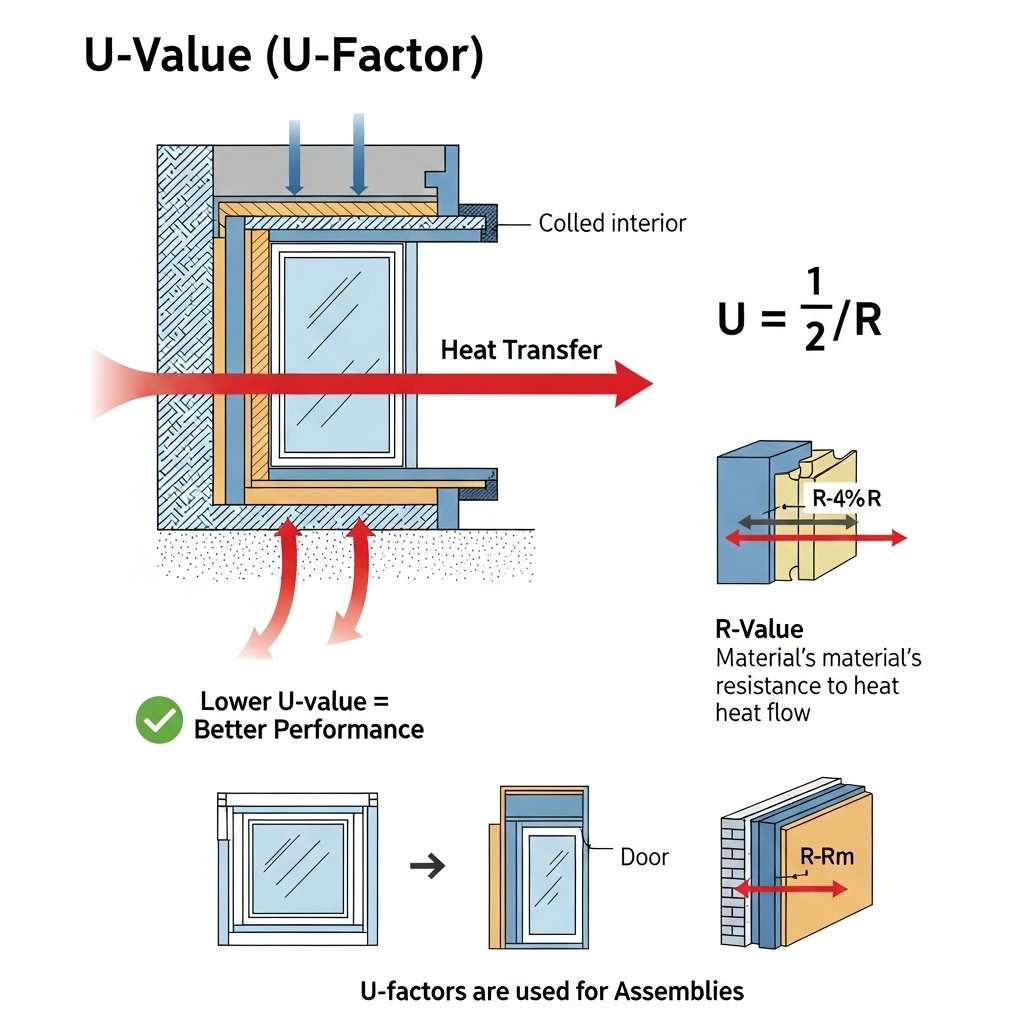
The rate at which heat moves through a structure (which can be made of one material or many materials), divided by the temperature difference across that structure. It is the inverse of the R-value (U=1/R).
A lower U-value indicates better insulating performance (less heat transfer).
-
U-factors are typically used for assemblies like windows, doors, and entire wall/roof systems.
-
Thermal Bridging:
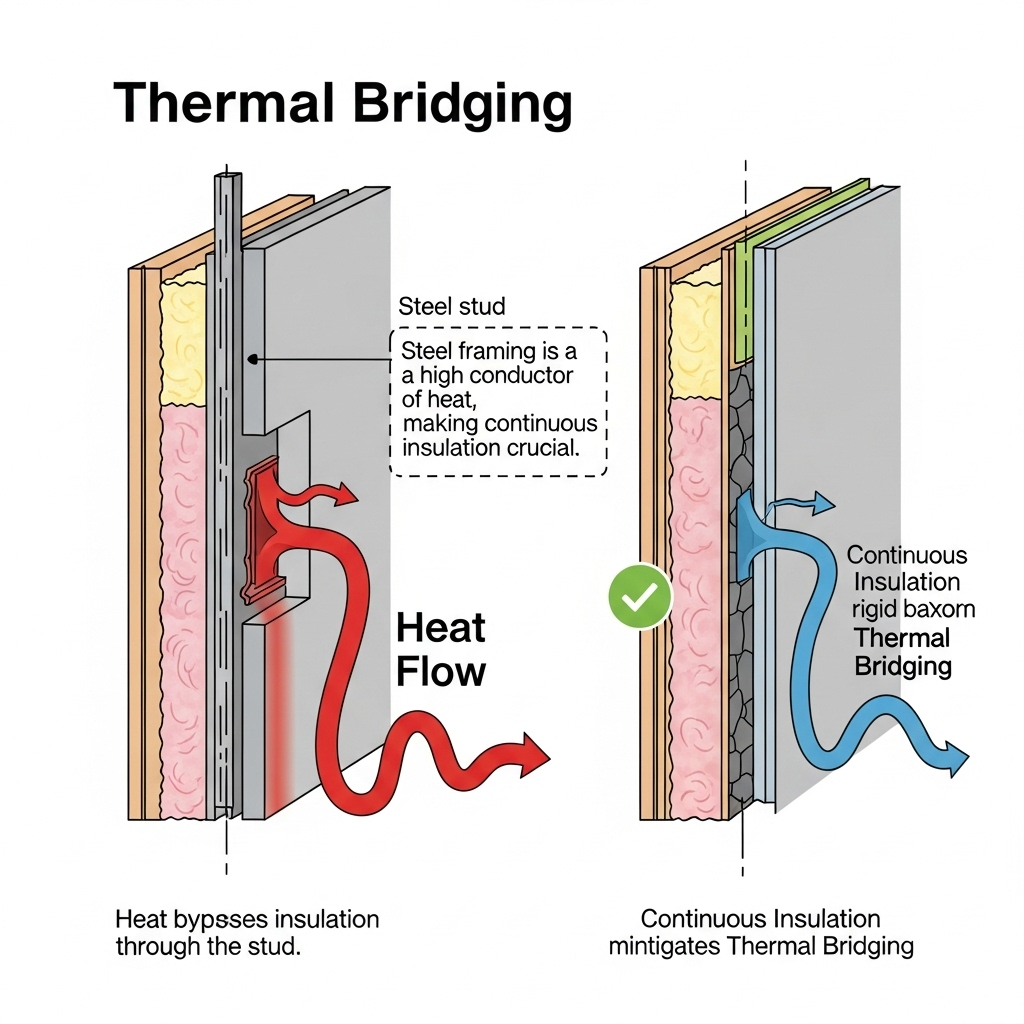
Occurs when a more conductive material (e.g., wood studs, steel studs) penetrates a layer of insulation, creating a path for heat to bypass the insulation.
This "short-circuiting" reduces the overall R-value of the assembly. Continuous insulation (insulation installed on the exterior of the framing) helps to minimize thermal bridging.
-
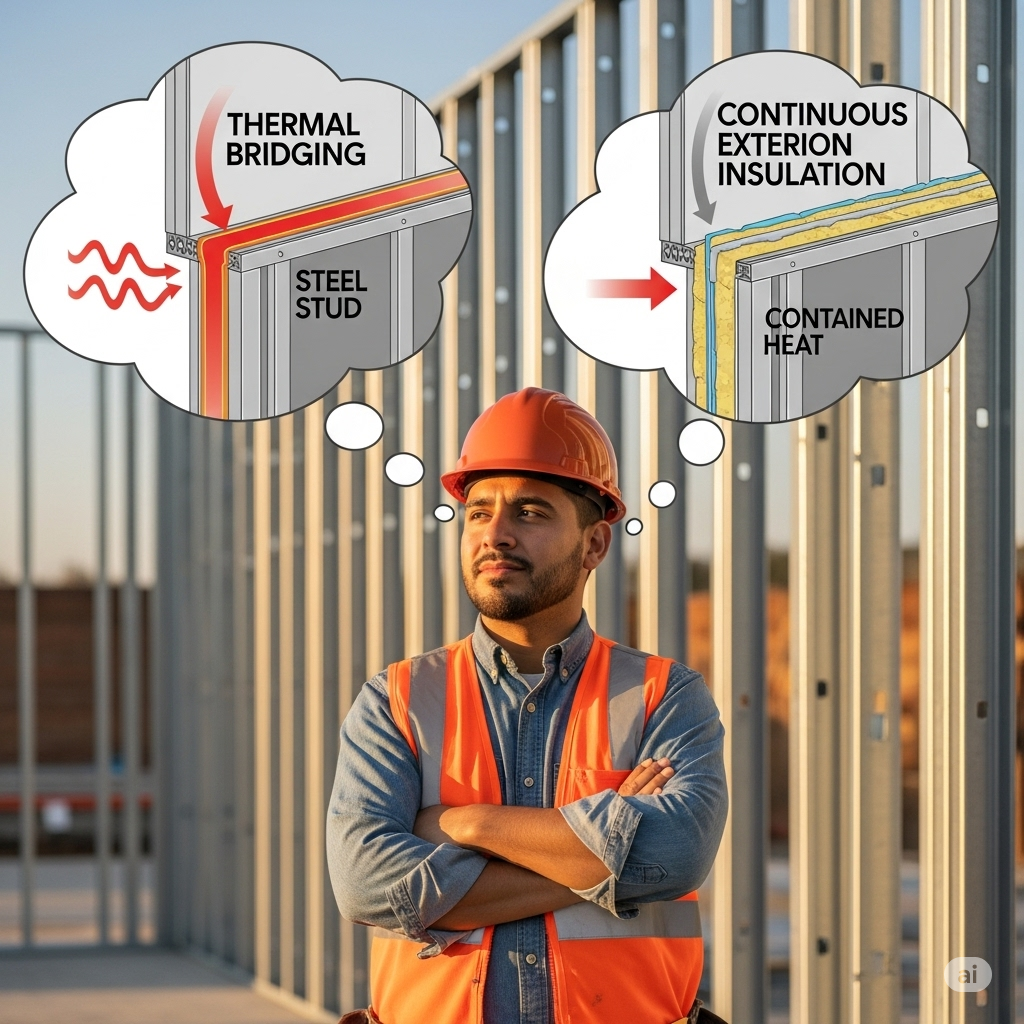
Steel framing is an excellent conductor of heat, making thermal bridging a significant concern in steel-framed buildings. Sufficient continuous exterior insulation is crucial to mitigate this.
Case Study Application:
-
Carlos the GC is designing the walls for his commercial office building. He knows that using steel studs will create thermal bridging, so he specifies continuous exterior insulation to achieve the desired overall wall R-value and prevent condensation issues.
-
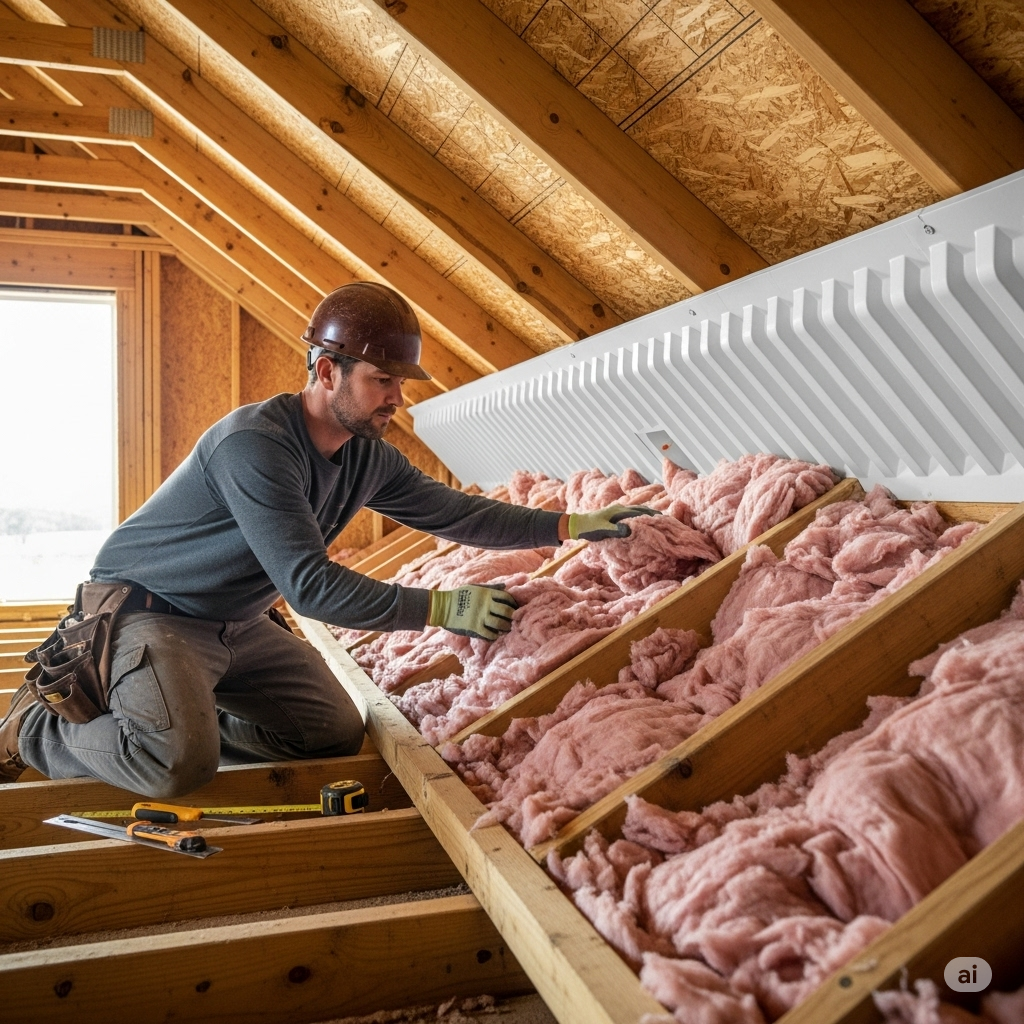
Brian the Builder is insulating the attic of his residential addition. He ensures that the batt insulation is installed without compressing it, especially at the eaves, to achieve the full R-value and allow for proper airflow.
II. Insulation Materials and Strategies
A wide variety of insulation materials are available, each with different properties, R-values, and installation methods.
-
Common Insulation Materials:
Fiberglass: Available in batt, roll, and loose-fill forms. Good for insulating walls, attics, and ductwork.
Mineral Wool (Slag Wool, Rock Wool): Available as loose-fill, batts, or rigid board. Fireproof.
Cellulose: Primarily made from recycled newsprint, installed in loose-fill, wall-spray, dense-pack, and stabilized forms. Can help reduce air leaks in wall cavities.
Expanded Polystyrene (EPS): A foam product in rigid board form, often called beadboard. Used in insulated concrete forms (ICFs) and structural insulated panels (SIPs).
Extruded Polystyrene (XPS): A rigid foam board, typically blue, pink, or green. Offers good insulating value and moisture resistance.
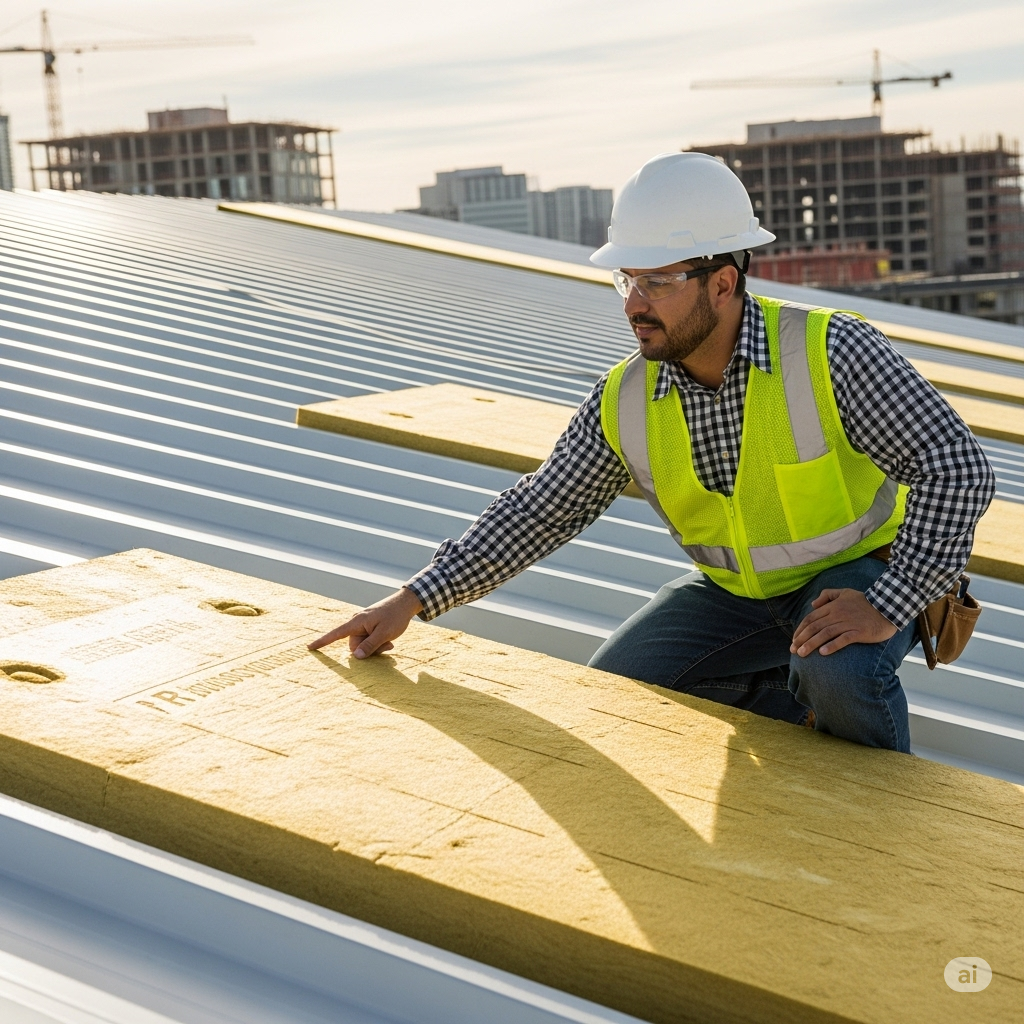
Polyisocyanurate (Polyiso): Foil-faced rigid board, one of the highest R-values per inch. Common for low-slope commercial roofs.
-
Spray Polyurethane Foam (SPF):
Closed-cell, high-density: Provides high R-values in thin spaces, has structural properties, good adhesive properties, and good compressive strength. Used for cavity insulation and roofing.
Open-cell, low-density: Primarily used to seal air leaks and provide an insulating layer.
-
Insulation Strategies:
Seal Air Leaks: Critical for optimum performance. Insulation is not a replacement for proper air sealing.
Complete Coverage: Ensure insulation completely fills cavities and covers all areas, especially around doors and windows.
Avoid Compression: Compressed insulation loses its R-value.
Attic Floor Insulation: Loose-fill or batt insulation can be used. Ensure baffles preserve ventilation space at eaves. Insulate access hatches and stairs to an equivalent level.
Cathedral Ceilings: Require careful design to provide adequate space for both insulation and ventilation within the rafter depth. Higher R-values may require larger rafters (e.g., 2x12s for R-30) or high-density batts. Rigid foam insulation can be used under rafters but must be covered with a fire-rated material (e.g., drywall).
Raised Heel Trusses: For truss roofs, these provide adequate clearance for both insulation and ventilation at the eaves.
Interior Framed Walls (over masonry): A framed wall on the interior of a masonry wall allows for standard framed wall insulation and air sealing practices.
Insulated Concrete Form (ICF) Systems: Permanent rigid plastic foam forms filled with reinforced concrete, creating structural walls with significant thermal insulation. Offer high R-values and reduced air leakage.
Structural Insulated Panels (SIPs): Foam panels with structural sheathing (e.g., OSB) attached. Reduce labor costs, have high R-values, and less air leakage.
-
Radiant Heat Barriers (RHBs):
Reflective materials that reduce summer heat gain by reflecting thermal radiation. They work best when facing a vented airspace and are installed to prevent dust buildup.
Most effective in hot climates for reducing air-conditioning costs. No standard R-value is assigned to RHBs.
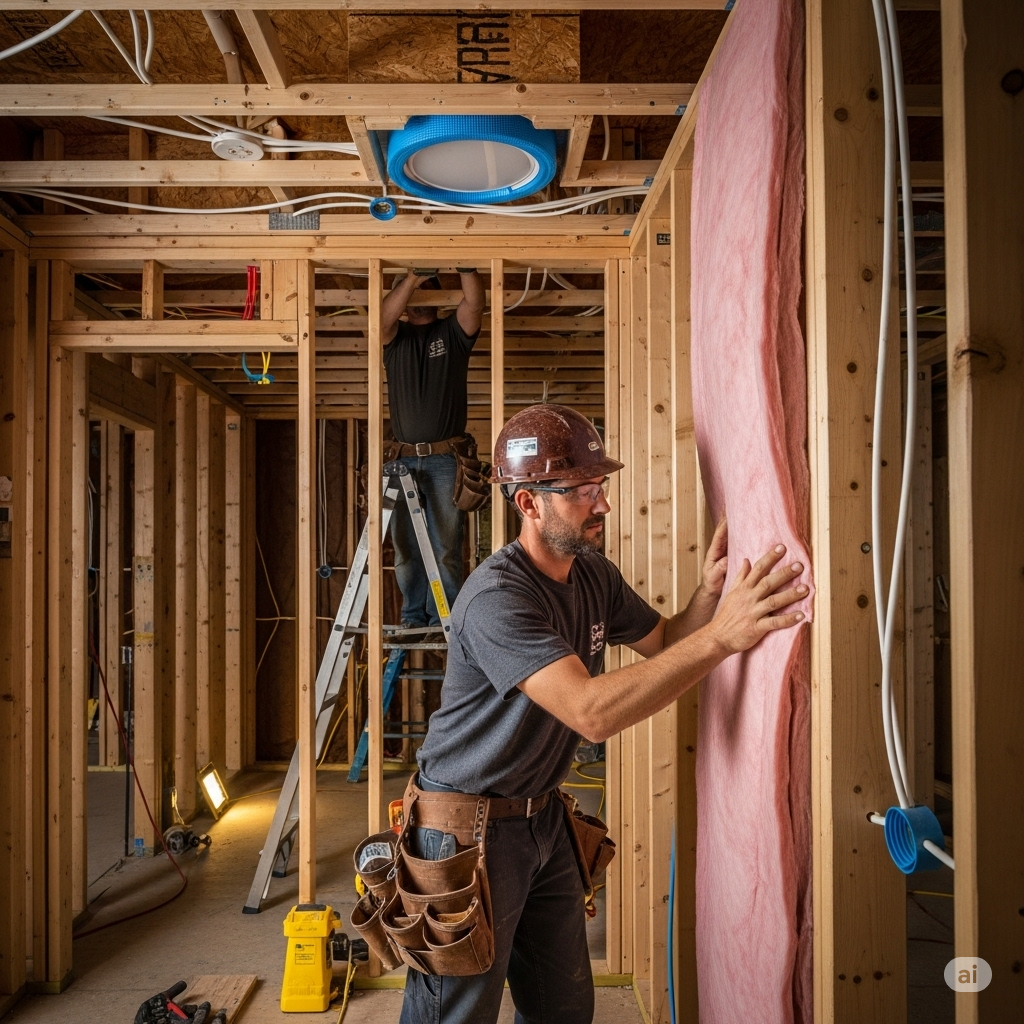
Recessed Lights: Standard recessed fixtures can leak considerable air and require clearance from insulation. Use airtight IC-rated fixtures to minimize air leakage and allow insulation to cover them.
Case Study Application:
-
Carlos considers the use of polyisocyanurate rigid insulation for the roof of his commercial building due to its high R-value and suitability for low-slope applications.
-
Brian selects fiberglass batt insulation for the walls and attic of his residential addition, ensuring it is friction-fit and not compressed. He also specifies airtight IC-rated recessed lights for the ceiling to prevent air leakage into the attic.
III. Air Leakage and Vapor Control
Controlling air leakage and understanding vapor movement are critical for energy efficiency and preventing moisture-related problems within the building envelope.
-
Air Leakage (Infiltration/Exfiltration):
Uncontrolled air movement through cracks and gaps in the building envelope.
Significantly impacts energy consumption and can transport large amounts of moisture, leading to condensation and mold.
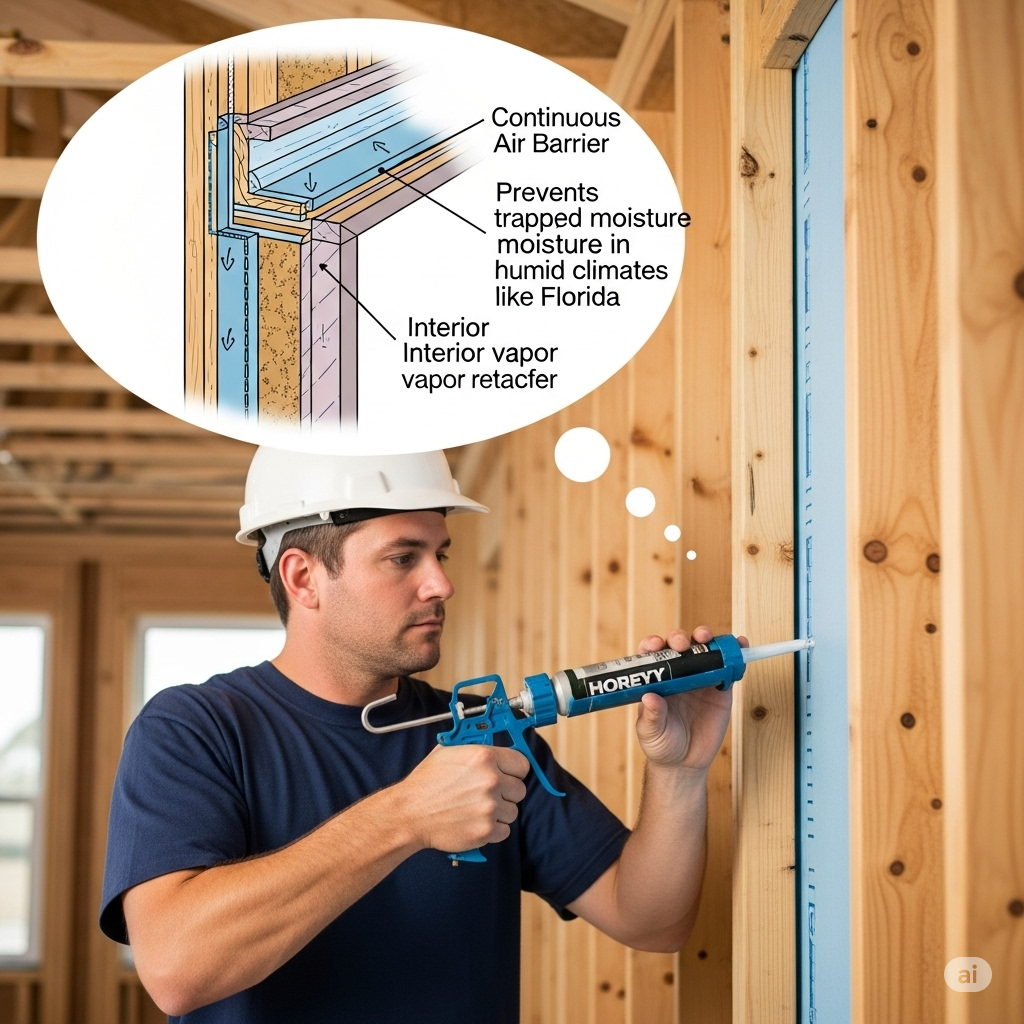
Air Barrier: A continuous system designed to limit air leakage. It must be continuous over the entire building enclosure, with all breaks and joints sealed.
Testing: The Florida Energy Conservation Code requires buildings to be tested for air leakage. Residential buildings in Climate Zones 1 and 2 (most of Florida) must not exceed seven air changes per hour (ACH).
-
Vapor Movement and Vapor Retarders:
Vapor Diffusion: The slow movement of water vapor through building materials from an area of higher vapor pressure to lower vapor pressure.
Vapor Retarder: A material or system designed to significantly retard the transmission of water vapor through a building assembly. Classified by "perm rating" (Class I: 0.1 perm or less; Class II: >0.1 to <1.0 perm; Class III: >1.0 to <10 perm).
Florida's Climate: All Florida counties are classified as "warm humid counties." In this climate, the vapor drive is predominantly from the outside of the building inward. Therefore, careful consideration is needed before incorporating a separate vapor retarder as part of the wall or roof system, as improper placement (e.g., impermeable interior coverings like vinyl wallpaper or interior polyethylene vapor retarders) could trap moisture within the assembly, inhibiting drying and promoting mold and mildew growth.
For unvented attic assemblies, the Florida Building Code specifies that no interior vapor retarders should be installed on the ceiling side (attic floor).
Exterior Elastomeric Paint: Masonry buildings in Florida have successfully used non-breathable elastomeric paint on the exterior of the wall to function as a vapor retarder, effectively limiting moisture ingress from the outside.
-
Attic Ventilation:
Properly designed attic ventilation can reduce roof and ceiling temperatures in summer, potentially saving on cooling costs and extending roof life. In winter, it expels moisture.
Vents should be located high (ridge) and low (soffit) to provide air movement across the entire roof area.
Powered Attic Ventilators: Generally not recommended as they can create negative pressures, drawing outside air or pollutants into the home and removing conditioned air.
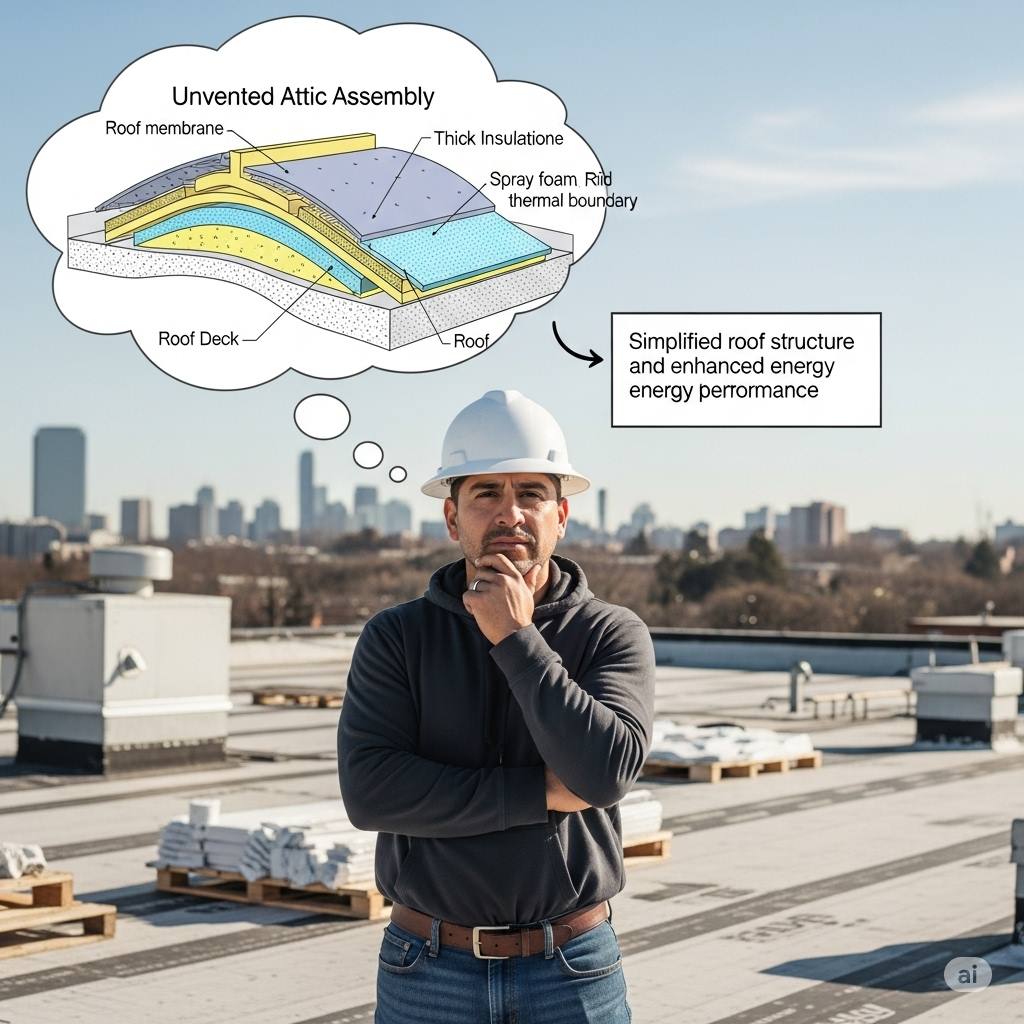
Unvented Attic Assemblies: The Florida Building Code allows for unvented attic assemblies if certain conditions are met, eliminating the need for traditional attic ventilation.
Case Study Application:
-
Carlos considers an unvented attic assembly for his commercial building's roof system, which can simplify the roof structure and enhance energy performance, provided it meets the specific FBC requirements.
-
Brian ensures that the air barrier of his residential addition is continuous and sealed to minimize air leakage, which is crucial for meeting Florida's energy code requirements. He also avoids installing an interior vapor retarder in his wall assemblies, understanding that in Florida's humid climate, this could trap moisture.